Art Materials: Money Saving Ideas Part I

DSCN4884

Cloud Cuckoo Land, Inktense Pencils and Technical Pen

Drawing and sketching materials

There are some wonderful art products available these days. But the downside is that they are so expensive. I like to find ways to save money on these so that I can enjoy doing artwork without wastage and unnecessary expense. The following are some of the cost saving methods that I use.

I’ll start with drawing materials. I have tried many kinds and have made some expensive mistakes. When I was at art school I bought a set of 45 soft pastels that I used throughout the course. A few years later I decided to buy a larger, expensive set of the same brand in a wooden box. Unfortunately I became sensitive to the pastel dust and could not use them anymore. I gave them to Ellie but she also has allergies, so they are sitting on a shelf. If you have asthma or dust allergies, don’t waste your money on soft pastels. If this is not a problem make sure that you use any fume producing fixatives outside as these are quite toxic and may give you lung problems. A product is only worth buying if it is safe to use so check for health warnings before selecting an item.
DSCN4851

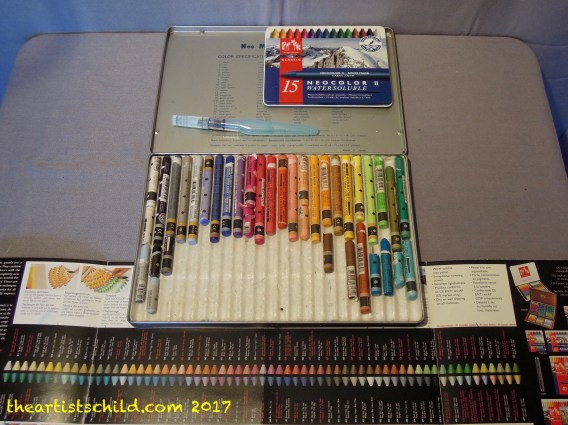
Neocolor Pastels and Colour Selection Chart

Oil pastels are an alternative to the soft variety. These don’t produce any dust and you can buy them individually. One disadvantage is that they require a solvent such as denatured alcohol to blend them like paint, which can be bad for the health. My favorite oil based pastels are the type that can be used dry or blended with water. I bought a starter kit of 15 Caran d’ache Neocolors to try them out. If you are not sure about a product don’t get a big set at first. These pastels can be bought individually and I have added more colours. I put them all in an old marker pen tin that I found. It is always good to hang on to old biscuit tins and chocolate boxes for storing art materials.

Refillable water brushes work really well with Neocolor pastels as you can control the amount of water needed. You just wipe the brushes clean between colours so you don’t need many. I use Neocolors all the time for free drawings on large sheets of paper. They work well on thick paper, in a visual diary/sketchbook (with good quality paper) and are most effective on watercolor paper. Well worth the purchase.
DSCN4897

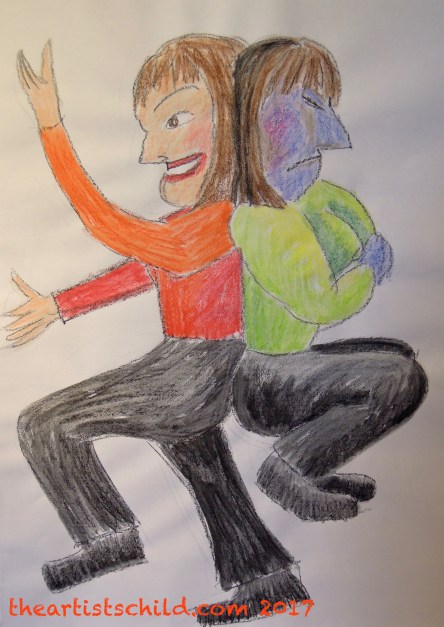
Keep Smiling, Neocolor Pastel Sketch

Colour pencils can be used for detailed drawings or sketches. No matter what brand you choose, always buy good quality colour pencils as they last for ages and are versatile. You can create soft effects or build up layers with several colours. I still have the set of Derwent Artist pencils I bought at school. I used these throughout art school, although a few of the pencils are now quite short but these can be replaced. These pencils were the first artist quality materials I used. I remember saving up for ages so I really looked after them. To save on the price you can find second-hand colour pencil sets that have had little use on eBay or Gumtree.


Water soluble pencils are also great for sketching in a journal and Ellie has a watercolour set. I like stronger colours so use Derwent Inktense pencils for this purpose. They last longer than expensive artist’s inks. Blending can be done with refillable water brushes and you can combine these with other colour pencils. They add colour to pen sketches. I buy disposable technical pens. Refillable technical pens block if you don’t use these regularly and then you spend ages taking them apart and cleaning them with hot water and methylated spirits. I can do without the aggravation. The ink for these pens is also really expensive.


For larger areas of colour in works on paper, watercolours or gouache are popular choices. I inherited a couple of watercolour paint sets, one with tubes and the other pans. Some of the tubes had dried up so I replaced these with student grade ones to try out this medium. The pan colours were still soluble when water was added despite their age. A water dropper is a good water dispenser. I squeezed some tube colour into the empty pans. This is an economical way of creating your own refills rather than buying replacement pans.
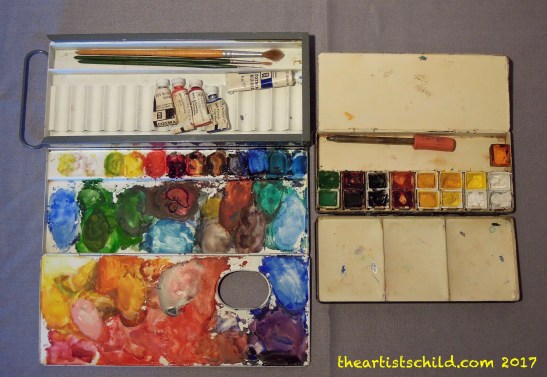
DSCN4825

Old Water Colour Sets

Watercolours are great for transparent effects and wet on wet painting. I prefer strong colour and tended to use them more like gouache. I’m glad that I did not spend a lot of money on these paints because I am not really a water colourist. I did not replace the tubes when they ran out or dried up and instead purchased some gouache tubes. But don’t let me put you off. If you want to try out watercolour or only use it for journals where the work is not always exposed to light, an inexpensive brand is a good solution. Have look on-line to find a suitable type for your budget. You might be lucky and find a decent second-hand set.
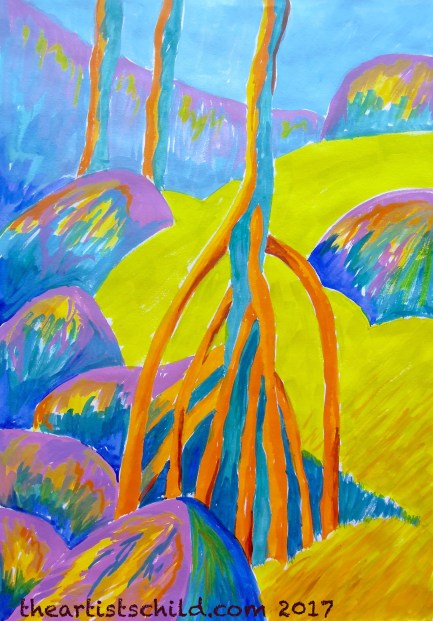
DSCN4862

Beach Mangroves, Watercolour Sketch

When you want to try out a new art material check that it is safe to use, look at on-line reviews and demonstrations and initially buy a small starter set to find out if you like the product before spending more money. It is a plus if Drawing materials can be bought individually so you can add to your collection. Good quality pencils and paint pans or pastels to which you add water will have a longer shelf life than wet ones. And remember keep an eye out for any second-hand bargains or discounts.

In my next post I will talk more about paints and how to keep the price down.

Kat

This post needs a fun song so here’s the Canadian Band, The Barenaked Ladies with Drawing.
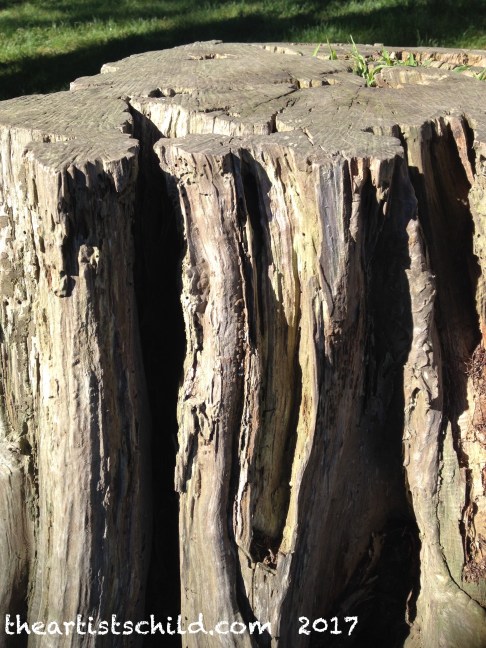
The Nature of Things: Texture

IMG_0421

Ellie’s photo of a Cyprus Pine stump

Everything has a texture. Part of the essence of a life form, natural or manmade object and substance relates to its texture. This can be silky, smooth, rough, spiky, sticky and so forth. There are so many words just to describe how something feels, that one could go on and on. Even sounds and music can be referred to in a textural manner such as abrasive, soft, fuzzy, scratchy or sharp.  Textures are very inspiring to visual artists, writers and musicians because they can be used realistically and metaphorically.

DSCN3256DSCN4633

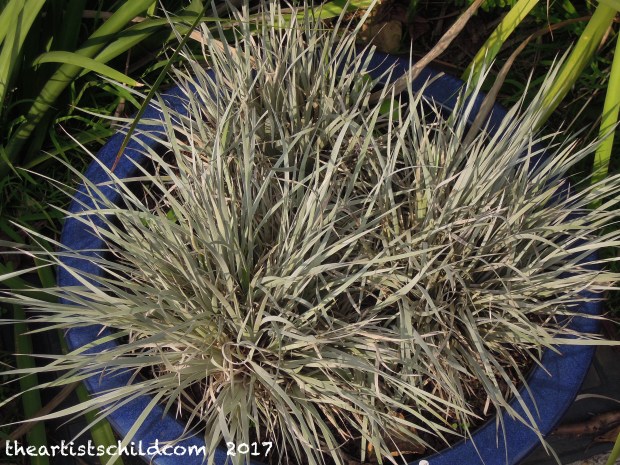
When I learnt basic photography as part of an art course, one of the first exercises given was to photograph patterns and textures. This has stayed with me and I still like to take photos of something just for its texture. These photos can be used as inspiration for an artwork or an end in themselves. The textures of plants create interesting photographs. The spiky native “Silver Sunrise” grasses with or without their yellow flowers; shiny yellow grapefruits against intense green foliage and rough tree-fern trunks all make tactile looking subjects.

I don’t have a SLR camera and it is difficult to get really close to an object so I must use iPhoto to crop the images and zoom in on a particular area. I find that you can do a lot with a basic photographic program to enhance and manipulate an image. For example I added definition to a yellow rose and increased the color, zoomed in on a sculptural rock to emphasize its soft green mossy texture and enhanced the shine on a rock with quartz crystals to make it more crystalline. The inherent characteristics were stressed for their own sake.

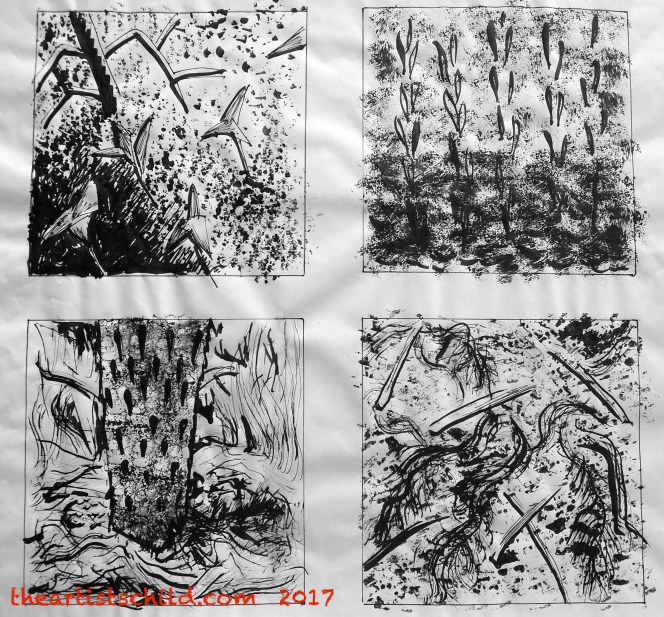
Sketching textures provides inspiration for visual art. With black ink, pens, stippling sponges, corks and brushes it is possible to get a variety of textural effects. I used some of these techniques in drawings for tapestry designs. They were worked up in a series of gouache vignettes, components of which were used in a final design. There are many other ways to use textures in art, from realistic oil painting, textured materials to simulated surfaces in computer graphics and is just a matter of personal preference.

Version 2

Version 2

Our personal experiences give us an understanding of texture. It is difficult to forget the experience of a sweaty handshake, a lumpy mattress, or the soft, velvety feel of a puppy. Words relating to texture often describe a person. Someone can be prickly, slick, oily, sleek, bristly, slimy, cuddly, hard etc. We associate touch with human characteristics and using these types of words can sum up and individual’s attributes without the need for a long explanation and are very useful for writers. When the sense of touch is engaged with words our minds conjure all kinds of feelings that can either repel or bring us closer to the subject.

Texture in music is often very involving for the listener. Layered music that creates sound textures can take you to real or imaginary places. The contrasts between different types of instruments like strings, electric guitar and drums, melody, rhythm and harmonies makes for rich, complex and emotional pieces. The Australian band, The Dirty Three, play imaginative textural compositions. This band of Victorians was formed in 1992 with members Warren Ellis on violin, Jim White on drums and Mick Turner, who is also an artist and designer of their album covers, on guitar. They often collaborate with Nick Cave. The following is a piece from their album, Ocean Songs (1998)

When considering a creative idea, don’t forget texture. It will add another dimension to your work, whether it is visual, written or auditory.

Kat

Winter Creativity: Escape the Cold Weather Blues

Version 2

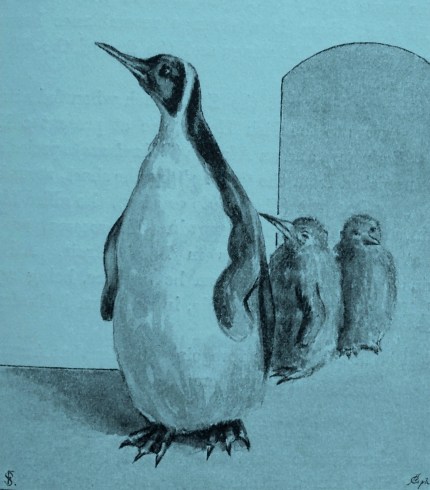
Penguin illustration from A Sketch of The Natural History of Australia by Frederick G Aflalo, 1896.

The weather in Melbourne has turned cold. For those of us who can’t leave town during the winter months it is good to find creative solutions to keeping warm and feeling invigorated. I’d rather feel like a butterfly happily searching for nectar, than a penguin sitting on a nest during a snowstorm. I’m not talking about pumping up the heating but tricking yourself into forgetting about the cold, dark days and taking a summer holiday in your mind.

I know compared with other countries our winter is relatively mild. You need to go up into the hills and mountainous regions to experience snow. But in Melbourne we do have icy southerly and southwesterly winds that blow straight from the Antarctic and the wind chill can be very unpleasant in the winter months.   I once heard a frequent British visitor say that he felt colder here than in an English winter. That’s why many retired people head north to escape. I could write a whole post about the peculiarities of Melbourne weather but I won’t. Instead here is a video taken by a drone of a snow-covered landscape near Ballarat, Victoria last year.

A good way to deal with the winter blues that can sometimes affect anyone is to involve your imagination and use all your senses. Begin with sight and surround yourself with images of summer: Flowers, the beach, out-door activities, whatever reminds you of the warmer months. When you need a boost watching movies that are set in the spring or summertime help to shut out the cold. Unfortunately we will view the new series of Game of Thrones in the middle of winter and all those snow scenes always make me feel really frozen. It will be a case of a fleece blanket, warm dog on lap and spicy curry on these days. So if possible avoid films and TV programs about snow (unless you are mad about snow sports) and find something with a sunny theme. Here’s a list of 100 Summer, Vacation and Beach Movies. You can also search for videos on You Tube with tropical related themes. Films of butterflies make me think of a past trip to North Queensland and the rain forests.

If you are lucky enough to have a spa pool, access to a local heated pool or volcanic hot springs you can still enjoy water activities in the winter, like the snow monkeys in Japan. A nice hot relaxing bath warms you up for ages, especially before you go to bed. If you have some type of bath, treat it like a holiday spa, with bath oil or bath salts. A few drops of essential oil will make it luxurious and smell wonderful.

On the subject of smell, fresh flowers with a lovely scent can lift your spirits when it is icy outside. Plants like Daphne and Winter Sweet give out a lovely fragrance in the cold weather and it is worth planting these in your garden to bring some flowers inside. Pine tree cuttings can do the same. Your home will smell wonderfully fresh. If you do not have access to any flowers you can always use fragrance diffusers or scented candles. The smell of lemon in a hot drink is most refreshing; in fact any citrus fruit brings in the sun so use oranges and limes in cooking.

Version 2

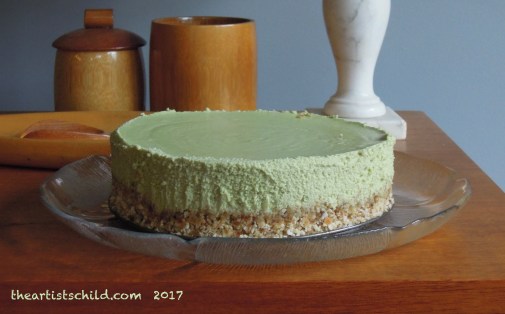
With the sense of taste you can relive summer memories and the right food will make you feel better. Nowadays we can obtain various summer fruits and vegetables all year round so put salads with your pasta dishes and make fruit pies. Curries, chilies and Asian style rice and noodle dishes are warming in winter but also a reminder of holidays in hot climes so tuck into these at any opportunity. Put pieces of fruit in drinks and stick in some cocktail umbrellas and imagine you are in the tropics. There are many more ideas for comforting food. My favorite dessert treat is Macha (Japanese powdered green tea) Key Lime Pie that requires no cooking just chopping, mixing and refrigeration (Recipe).

DSCN2432

Macha Key Lime Pie

Sound will take you to a warmer place. In a world full of music there is something for everyone to evoke the summer. It could be from a particular culture or from time spent in the sun. This is bound to be quite personal and there is no standard set list. When you are feeling sick of the cold play your favorite summer music and revel in the heat. Dance and sing to the music to elevate those endorphins. That’ll take away the winter blues.

When the cold weather is getting you down with a bit of creative thinking there are obviously plenty of ways to bring back that summer warmth and energy.

Kat

Here is a quirky indie pop song done by Melbourne band, The Lucksmiths, called T-Shirt Weather. I could not find a video version with good sound but the lyrics paint a sunny picture.

Visual Inspiration: When it is OK to Hoard

Version 2

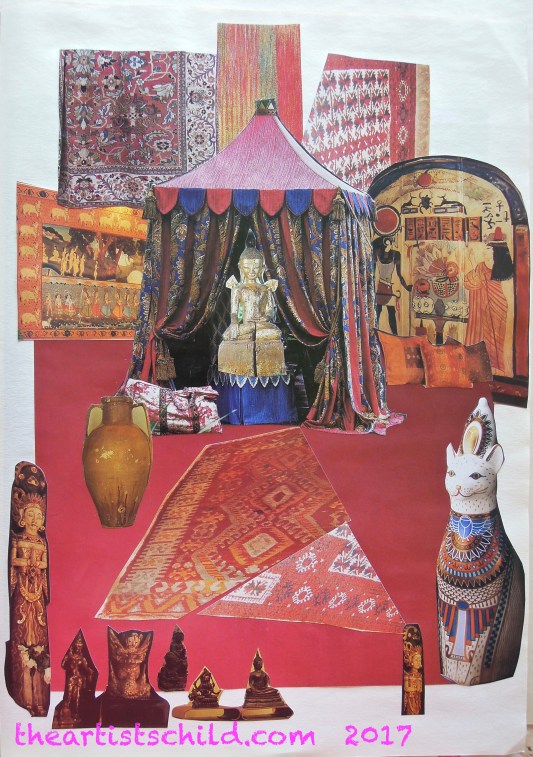
Shrine, Collage from Magazine Images by Kat

As artists and writers we get inspiration from many sources.  Being a visual person I find that I often need pictures, not to copy, but to stimulate my imagination for painting, drawing, poems or blogging.  I collect different types of images for this purpose and have amassed quite a collection.  To avoid hoarder chaos I have organized these so that they are easy to find.

Images of artworks, figures, nature, patterns and textures are all helpful resources and are good things for the creative person to have at hand when a bit of inspiration is needed.  It can be quite expensive to buy art and illustrated books, especially those that contain a lot of colour reproductions.  Ellie and I do have quite a good library but if we do not have a particular image it is easy to find an example on the Internet.  I download those that I like into my computer’s photo library so that I can refer to it at any time.

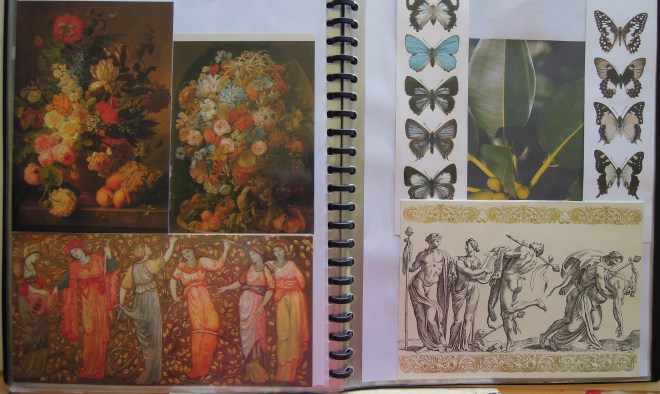
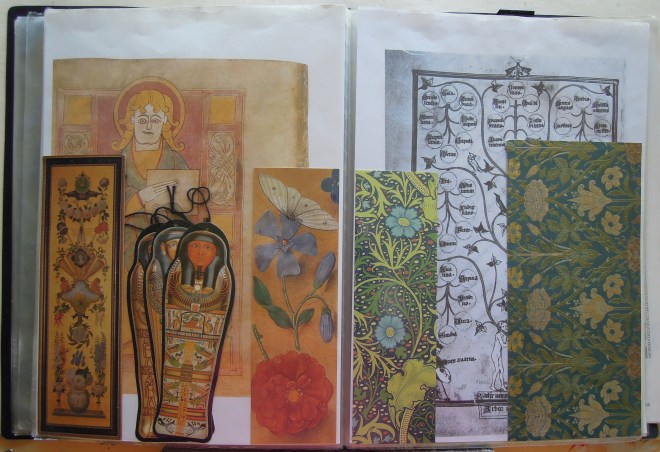
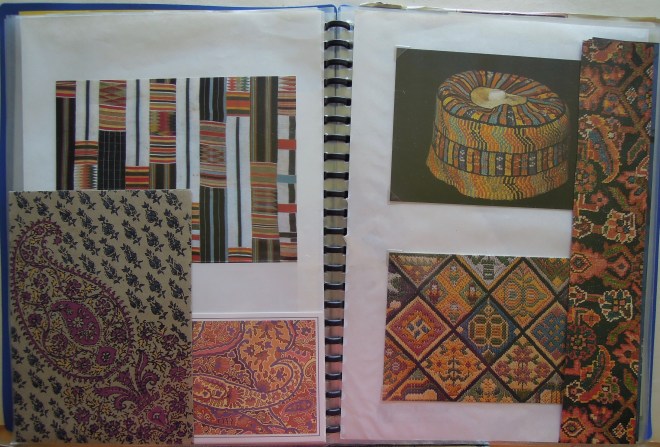
Many designers and artists pin paper copies of all kinds of images on pin boards in their workrooms for visual stimulus.  Printing out copies from the computer can use a lot of costly ink so for this purpose I have a large collection of postcards and greeting cards, either bought on holidays or from friends and relatives.  These are less expensive than buying books and are easy to find when travelling.  Advertising cards that are free in your letterbox, found at movie theatres, art galleries, museums and other public venues often have interesting depictions and are worth grabbing.  So that I can easily access these individual images I have put them into photo and postcard albums, display books, plastic pockets in ring binders and small boxes.  If you keep your reference material organized it is less likely to be accidentally thrown out by someone else.

Version 4DSCN3069

Version 2

Display Books with Paintings, Decorative Arts, Nature and Textile Images

Inexpensive visual reference books can be found at op shops, garage sales, and markets. Vintage books that were designed for children often have clear, simple images of nature, science and other subjects that can be really helpful for creative work.  Second hand magazines are also invaluable for doing collages and for pin boards.   If you had to buy these new it would cost a fortune.  It also pays to ask your friends and relatives to pass any old magazines in your direction.  Good quality advertising catalogues can be used as well.

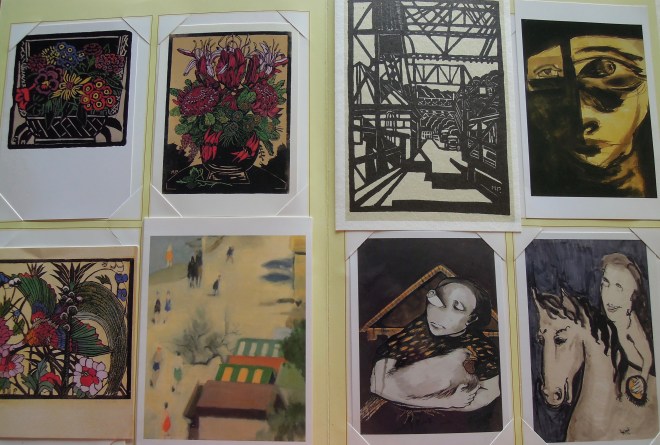
A creative person needs to learn to be a scrounger but be selective.  I do have favorite subjects and have quite a collection of the works of Australian women artists for motivation.  I love paintings from the Medieval to contemporary, all kinds of textile works and fairy tale illustrations and have a bit of an obsession with butterflies so will keep any image that possesses these.  Only store what really grabs you so that you do not end up suffocating under piles of paper.  You can add new images and discard others as your library evolves.

Version 2

Post card Album with Australian Women Artist Cards (Margaret Preston Prints, Clarice Beckett Oil Painting and three Joy Hester Water Colour Paintings).

You will be surprised at how often you refer to these visual resources once you have your own personal collection. You can use them in many ways to trigger all kinds of original ideas and images.

Kat

I’ve been on a bit of a Paul Kelly binge lately.  He is such a great songwriter and I have his Memoir How To Make Gravy that is an inspirational book with all its helpful advice to songwriters.  The following live performance of his beautiful ballad Midnight Rain was recorded on his Stolen Apples Tour in 2007.  His nephew Dan Kelly (on the left of screen), a terrific guitarist and performer, plays lead guitar on this song.

An Artist’s Best Friend

Version 2

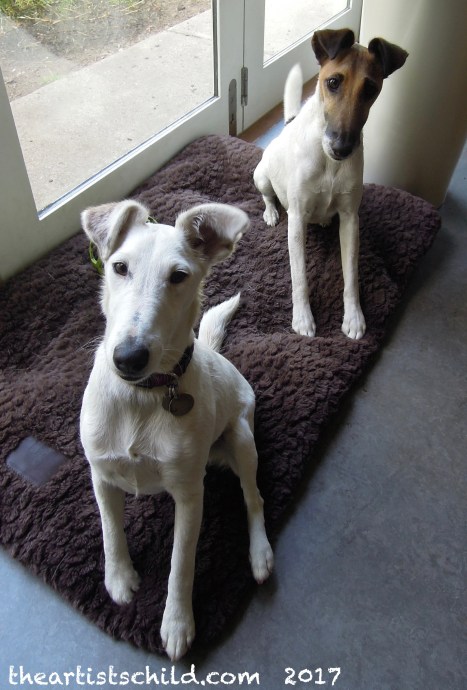
Our Two Fox Terriers

I had just written the first draft of this post and showed it to Ellie.  She read it and said, “no one wants to read about someone’s dog. It is too personal and boring.”  Of course she is right.  Anyone who has a dog thinks that theirs is the smartest, funniest dog in the world and they don’t want to hear about other people’s dogs unless it is an interesting story.  Taking on board what Ellie said I had a rethink and decided to write about dogs as a source of inspiration for artists and writers and how they have influenced my own creativity.

Dogs have inspired many works of fiction.  For example Jack London’s The Call of The Wild (1916), about the adventures of the Alaskan Klondike sled dog, Buck, Eric Knight’s 1940 novel, Lassie Come Home and Dodie Smith’s 1956 novel the 101 Dalmatians to name a few.  And who can forget one dog’s life story in Marley and Me (2005) by John Grogan.  These books were all made into popular and enjoyable movies.

Dogs as companions have produced entertaining characters like Scooby Doo from the cartoon TV series and Snowy in The Adventures of Tintin by Belgium cartoonist George Remi (Herge).  Generations of children have loved reading about the dog Timmy in Edith Blyton’s Famous Five books.  The French movie The Artist  (2011) benefited from the wonderful antics of the Jack Russell, Uggie and Eddie (Butch) provided many hilarious scenarios in the TV series, Frazier.

True stories about the incredible feats of dogs are also inspirational.  The Maremma Sheepdog used to trial their use for guarding Fairy Penguins against predatory foxes on the coast of the Victorian town of Warnambool, inspired the Australian film Oddball (2015).  There is also the successful Australian movie Red Dog (2011) based on a true story with a sequel in production.

Google songs about dogs and there is a long list.  Often they are used as metaphors that are not always flattering to dogs but more about human nature.  From old classics like Hound Dog (Elvis Presley) to anthems like Who Let the Dogs Out (Baha Men), these songs have kept our feet tapping.  Some beautiful songs have been written about dogs.  Cat Steven’s I Love My Dog, and Nick Drake’s Black Eyed Dog from the 1970s are just some of the many.  I have written a couple of songs about my dogs.  They are very personal and were a way of dealing with their loss.

There are so many stories, television shows, movies, songs and about dogs I could go on for pages and I have only mentioned a few.  But you get the point.  Dogs are popular subjects because they trigger strong emotions, whether in a story or as a symbol, that can generate creativity.

Our connections with dogs makes it hard to resist drawing and painting them.  Visual artists have created wonderful depictions of dogs to illustrate books.  I have a couple of early twentieth century children’s books with some lovely illustrations of dogs.  Tattine by Ruth Ogden (circa 1901) is full of sweet black and white paintings of a little girl, many with her puppy.  The frontispiece has a lovely watercolour of some puppies pulling at her night-clothes that has used typical behavior.  In Country Favorites (circa 1901) is a charming colour picture of two terriers watching a hedgehog.  As the owner of a terrier, I know this is in the realm of fantasy as they are hunting dogs and would not be leaving the poor thing alone.  But then again the hedgehog’s spines could be a deterrent and a realistic image would not be great in a children’s book.

DSCN4351

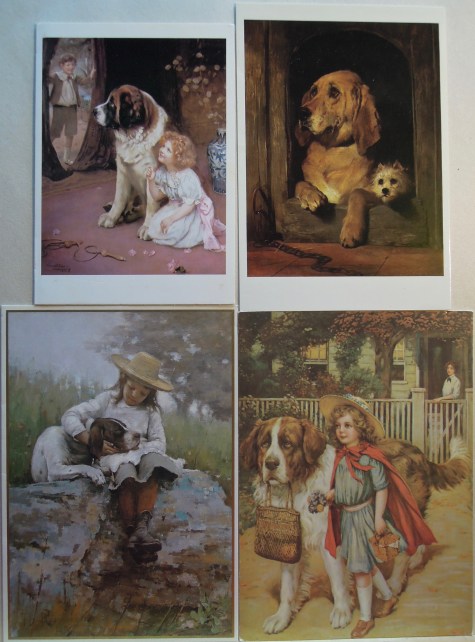
Greeting Cards Clockwise from top: Hide and Seek by Arthur Elsley (1869-1952); Dignity and Impudence by Edwin Landseer (1839); To School Well Fed on Grape Nuts, advertisement lithographed on tin (1917); The Girl With the Dog, Theodore Robinson (1852-1896).

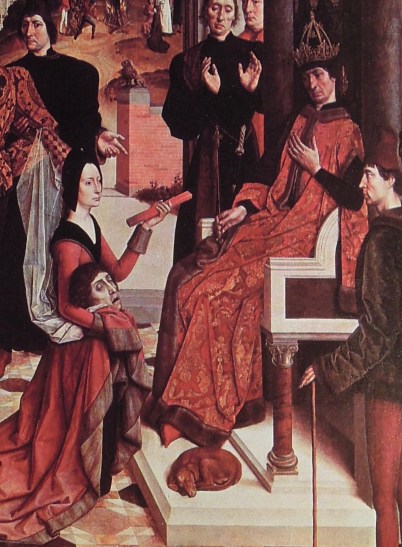
Amongst my greeting card collection, I have several with images of children and dogs from the nineteenth and early twentieth centuries.  A dog is a popular subject because anyone who has owned or loved dogs can relate to these works.  There is nothing like having the devotion and loyalty of a dog.  In fact in Medieval Flemish paintings dogs were included as symbols of faithfulness.

DSCN4370

Detail Justice of Emperor Otto III (1470-75) by Dirk Bouts

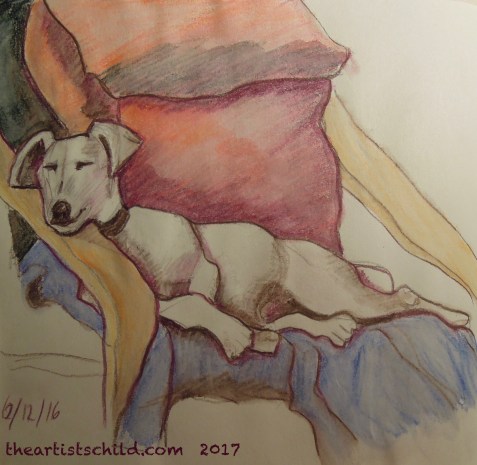
The actions of our own dogs have given both Ellie and me ideas for artworks.  We both like to do drawings of our two Fox Terriers.  Usually you can only get them to pose when they are asleep as they are in constant motion.  Ellie did a watercolour pencil sketch of her current dog that I really like and have included it below.

DSCN4378

Ellie’s Watercolour Pencil Sketch

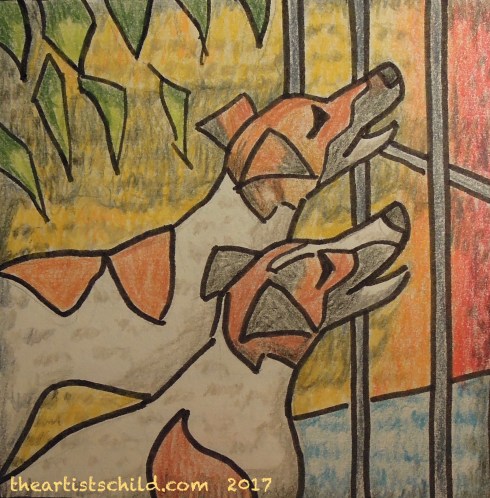
You hear all kinds of stories about dogs rescuing people from dangerous situations.  One day when I was upstairs, our previous two Foxies started barking furiously at the side gate.  I went down to have a look and got to the front of the house only to see that someone had broken a window and the door was ajar.  The intruder must have heard me coming.  I saw a leg disappearing around the corner and yelled some rather strong language before calling the police.  I had not heard the door knocker and if the dogs had not barked so loudly and in such an agitated manner I would not have known there someone was breaking in to our house.  This episode became a tapestry design and I have included one of the working drawings in this post.

DSCN4374

Drawing for Tapestry Design by Kat

It is obvious that I love dogs.  Dogs have always been important in my life and I could not be without one.  I think it is essential to have a dog (or cat) if you work at home. Talking to your pet is a good way to work through an idea.  Better than talking to yourself which can look strange if someone catches you doing this.  But with a dog it is perfectly normal because they listen intently. You just know when they think your idea is rubbish.  Dogs do sneering well.  But when your enthusiasm for something is conveyed to them they take up the good feelings and go with it.  You know you are on a winner when your dog smiles and wags his tail like crazy.

Dogs can be heroes, counsellors, entertainers and best friends amongst their many traits and this makes them perfect subject matter for creative work.  If you work at home and spend a lot of time on your own it is so easy to get caught up in your work and a dog keeps you connected to reality.  We benefit in so many ways from our relationship with our dogs and should never take them for granted.  Dogs are always an inspiration.

Kat

The following video shows a compilation of clips from 1930s films starring the wired-hair fox terrier Skippy.  Skippy starred as “Asta” in The Thin Man films with William Powell and Myrna Loy, as “George” in Bringing Up Baby with Cary Grant and Katherine Hepburn and as “Mr. Smith” in The Awful Truth with Cary Grant and Irene Dunne.  This delightful dog’s actions are put to the song Who Let the Dogs Out performed by Baha Men.

A Room With A View

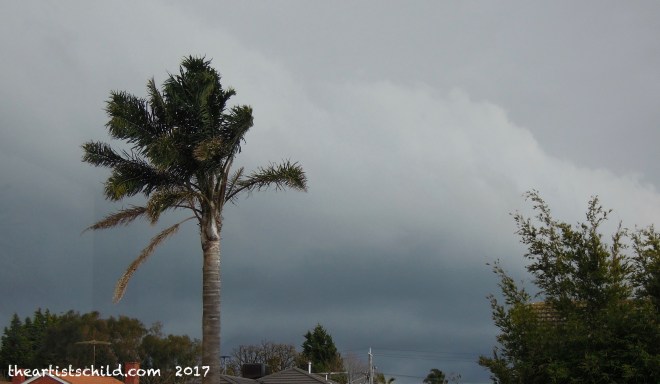
Version 2Version 2I’m not about to talk about the 1980s film starring Helena Bonham Carter, but about how it is always wonderful to have a pleasant view from the room where you spend most of your time working.  It is very soothing and good for your well-being to have an interesting outlook.  I have two large windows in our studio.  One window overlooks the back garden and the other has a wide view over neighbouring rooftops and of the sky.  Because a large two-story house is soon to be built next door, I will lose the unencumbered view.
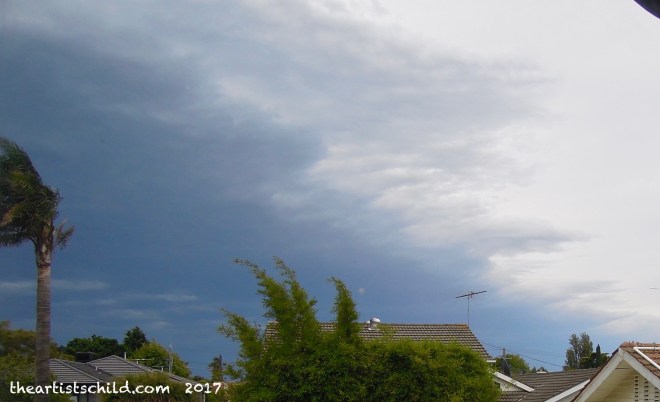
This view has given me much pleasure over the years.  I have watched so many aircraft, such as the Air Force acrobatic team, the Roulettes, doing routines before the Australian Football Grand Final or the Melbourne Grande Prix, as well as Fighter Jets and Black Hawk Helicopters doing exercises.  Vintage planes in formations and huge aircraft for airshows have entertained me from time to time.  I often see parachutists descending to a local park and the Goodyear blimp has passed by making its slow way across the skyline.  There have occasionally been spectacular fireworks.  At dusk in the warmer months I see Flying Foxes (fruit bats) flying low over the rooftops on their way to find food and all kinds of birds have flown past this window on their way to who knows where.

DSCN1852

Views can keep us connected with the natural world and this is good for the health.  Observing natural phenomena has helped to elevate my mood and made me respect the forces of nature.  There is nothing like the azure blue sky of a bright sunny Melbourne day dotted with cumulus clouds to make you feel happy.  At other times watching the rain sheeting down over the rooftops is always an incredible sight.  When this view is gone I will miss seeing the moon in all its phases low on the horizon, the beautiful sunsets and the dark storm clouds rolling in at different times of the year.  Some storms have been quite scary at times when the wind is gusting at over 100 kilometres an hour and there are lots of dramatic forked lightning but they are exciting.  No matter what it says in the weather reports it is always better to see what is actually happening out the window.

There is not a lot I can do to stop the inevitable so I will have to make the best of things. At least I still have the other window that looks onto the greenery of the garden and can go outside in fine weather.  If I did not have this option I would probably put up lots of pictures and posters of the natural world and fill the room with plants to feel better in the winter months.

I have enjoyed my sky view for a long time and I will miss it a lot.  It might not be the most spectacular panorama compared with some wonderful scenery in the world but it has been mine.  If you have a sky view, no matter how small, make the most of its benefits while you can.  And if you have no view to speak of create one yourself with a virtual window and some posters and plants.

Kat

This post calls for a happy song so here is ELO, the 70s British band and proud wearers of satin shirts, doing Mr Blue Sky.

The Art of the Squiggle

A great way to free up your drawing and to think in an imaginative way is to do squiggles.  A squiggle is a random set of various lines drawn onto a page.  Either oneself or someone else then connects these lines to create an imaginative image.  This type of squiggle drawing originated in the Australian children’s Television program, Mr. Squiggle, which ran from 1959 to 1999 and was beloved by several generations.

Mr. Squiggle was a marionette with a pencil for a nose.  He came from the moon in a rocket and with the help of a grumpy blackboard and a presenter, created his drawings using the squiggles sent in by the child viewers.  It was a form of interactive drawing long before children had access to computer drawing programs.  Mr. Squiggle was the brainchild of puppeteer, Norman Hetherington.  He usually did the drawings upside down from the viewer’s perspective because that is the way he would see the page while operating Mr. Squiggle.  Then the finished drawing would be turned right side up and the image revealed.  Here is a five-minute episode of the program found on You Tube.  It is still delightful to watch.

As children, Mr. Squiggle and his clever drawings fascinated Ellie and me.  No squiggle was too difficult for him to transform.  It seemed like magic when the random lines became something recognizable and usually whimsical.  He must have done thousands of drawings over the 40 years that the show ran.

This drawing concept was so simple yet so inspiring for children.  It taught us how to use our imaginations with just a pencil and an eye for the image long before we learnt about great artists and their techniques.  There was no pressure to produce a great work of art. It was about the pure joy of the act of drawing.  And it was something you could do yourself.  We never sent in a drawing to the show but Ellie and I would do this type of drawing together, each transforming the other’s squiggles into a fun image.  It was a great game to play on rainy days.

I still like to do squiggles.  This type of drawing makes you come up with creative and often amusing ideas because you must use all the lines.  You can do it with someone else but usually I do these drawings for myself.  To make sure that the lines are completely random, I close my eyes and scribble on the page.  Then I look at what I have done and turn the drawing around and view it from different angles.  Sometimes it is possible to see an image immediately but at others it takes longer.  It is good to consider all the shapes and their relationship in space from various perspectives.  But eventually something is revealed.

It is not so much about doing a perfect drawing but more about stimulating the imagination and having fun.  If it turns out a bit wonky that does not matter.  And you can always do another one.  That is what is great about squiggles.  They are endless and you can use the simplest of drawing materials.

All drawing should be as enjoyable as a squiggle and it is a way of restoring your childhood creative spirit.

Happy squiggling.

Kat

The Worry Tree

DSCN4298

I’m a worrier.  Always have been since I was a child.  I’d worry about my schoolwork, passing tests, my health, anything and everything.  I still worry about things and I know it’s a waste of energy.  These types of bad thoughts can sometimes get blown out of proportion so that they interfere with your creativity and stop you from getting things done.  You need to put them into perspective.

The song I’m So Worried by Terry Jones of Monty Python fame sums up this type of worrying.  It’s just ridiculous and you will always find something to worry about if you let everything get to you.  Although I did have a bag damaged by the “baggage retrieval system they’ve got at Heathrow” so maybe that is something to worry about.

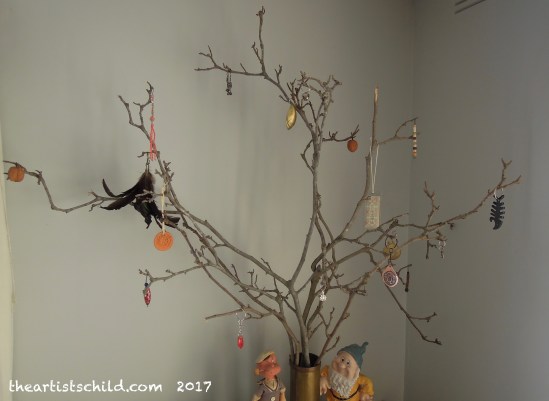
As a form of self-therapy I recently created a “Worry Tree.”  I figured I needed more than worry beads to relax me.  Using some pruned branches from our Magnolia, I hung up an object every time I felt anxious about something.  I even made some beaded ornaments from those left from broken necklaces.  By looking for or making something to hang on the tree I find that I completely forget about what is causing my worry and I can relax. This type of diversionary method works because I’m involving myself in a meditative process.

People have attached things to trees for millennia to ease their worries and ask for help. For example in Ireland, Cornwall and Scotland trees are often associated with sacred wells and petitioners attach pieces of cloth and other objects as a prayer or supplication. They are called Clootie wells in Scotland and cloutie wells in Cornwall.

To externalize your worries by attaching a symbolic or written item to a tree can be an effective remedy.  Then you can let it be.  I only wish my worry tree was a living one, although this would be a bit difficult to fit on my desktop.   My worries have now been turned into something fun and creative that makes me feel happy.

On a positive note, being worried has definitely inspired songwriters.  There is The Worried Man Blues, a traditional song that has been recorded by Woody Guthrie, Pete Seeger and many others.  I like Johnny Cash’s version.

Probably the most famous song that shows how stupid it is to worry is Bobby McFerrin’s Don’t Worry Be Happy .  It deservedly has had millions of views on You Tube.  I love to sing and play this on my ukulele and it always makes me feel good.  A less well-known song of the same title with a similar theme is by Australia’s Guy Sebastian.

Instead of worrying find something that you can do to ease these annoying and distracting thoughts.  Maybe a “Worry Tree” will work for you as well.

Kat

Ecstatic about Eggs

DSCN4252

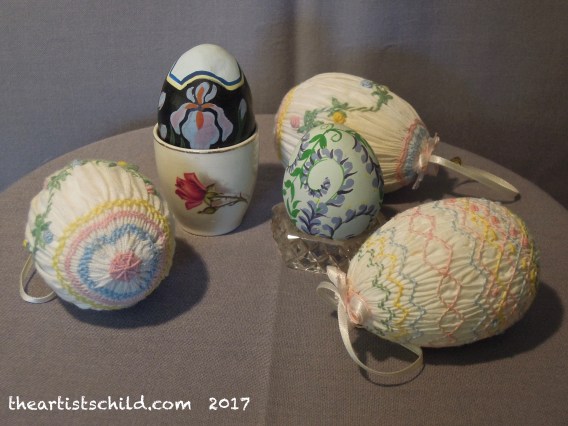
I love all types of decorative eggs.  You could say I’m eggstatic about them just like “Egghead” from Batman (aka Vincent Price) with all his bad puns.  Ellie and I have a small collection.  None of our eggs cost very much and many of them were gifts, as well as some being family heirlooms.  I have also decorated some and created one from scratch.

For many people the egg is a major symbol of Easter, of spring fertility and rebirth.  For kids it is about chocolate.  In many cultures it is also the cosmic egg in creation myths.  The egg is the ultimate symbol of creativity and has inspired many artist’s and crafts people to create beautiful objects.

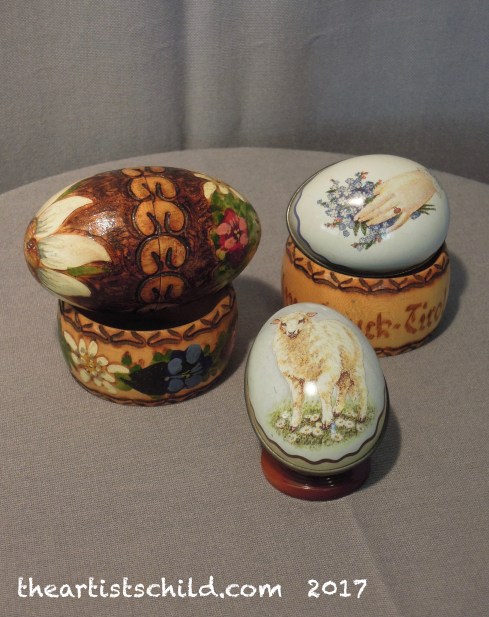
A collection usually begins with one object.  My parents had a Austrian poker work egg brought back from an overseas trip.  It opens up to form two egg cups and has matching napkins rings.  I was always fascinated by it’s decoration and shape so when I saw other interesting eggs on holiday or in op shops I would snap them up.

DSCN4216

Austrian poker work egg and Swiss tin eggs

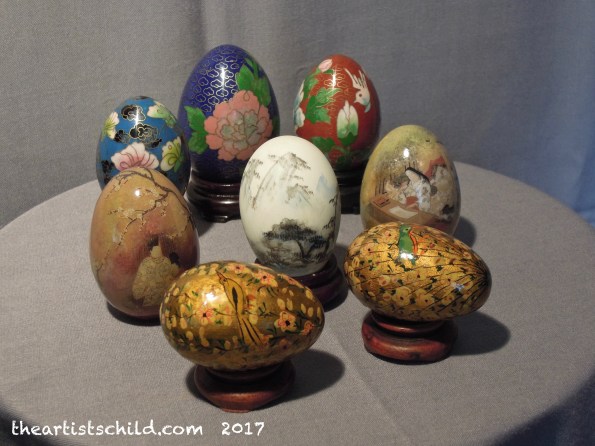
Some of our eggs have been brought back by family members from holidays overseas as gifts.  Our aunt gave us some cloisonné eggs from China and they came with little wooden stands.  I also had some old ones from a relative that are good for displaying eggs.  On a trip to Japan several years ago we also found some lovely decoupage eggs when visiting an exhibition at the Tokyo Museum that depict images from some medieval narrative scrolls.

DSCN4198

Chinese cloisonné eggs (back row),  Chinese painted real egg (centre),  Japanese decoupage eggs (left and right centre row) Chinese painted wooden eggs (front row).

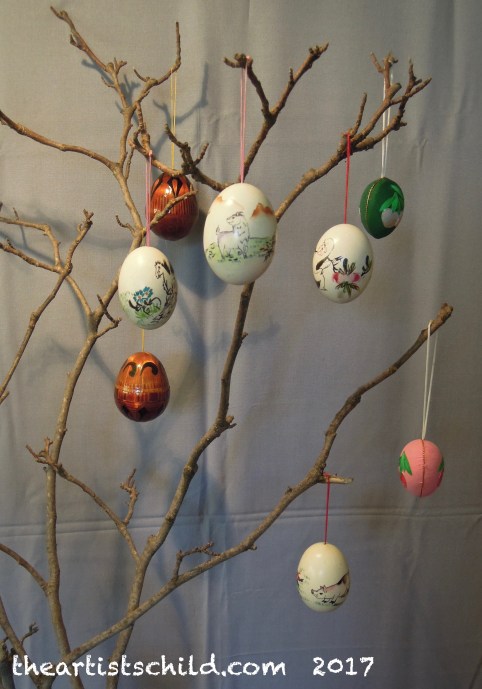
Because Australia is so close to Asia it is easy to get Chinese eggs here.  Locally we found some real eggs that were painted with the Animals of the Chinese zodiac, like the horse and monkey.  These are quite fragile and need to be stored carefully.

There are also some Asian plant fibre eggs but I have forgotten where they come from as they were a gift.  Shows you should write things down at the time.

Old egg cups are good for displaying eggs.   We have a couple of vintage majolica ones from Italy: a turkey and a duck, as well as a later goose, all found at op shops.  These are quite fun and painted wooden eggs look great in them.

DSCN4213

Polish wooden eggs and Russian painted egg at back

DSCN4209

Russian wooden eggs

Old napkin rings are also good for displaying eggs.  They come in all sorts of shapes and materials and make an interesting collection of their own.  I also find large vintage buttons good for stopping eggs from rolling around.

Eggs come in so many different materials and can be an example of various crafts.  You can find interesting ones at local craft markets or specialist craft stores.

DSCN4224

Australian painted real eggs and Philippines embroidered fabric eggs

DSCN4231

Hand blown glass eggs

DSCN4206

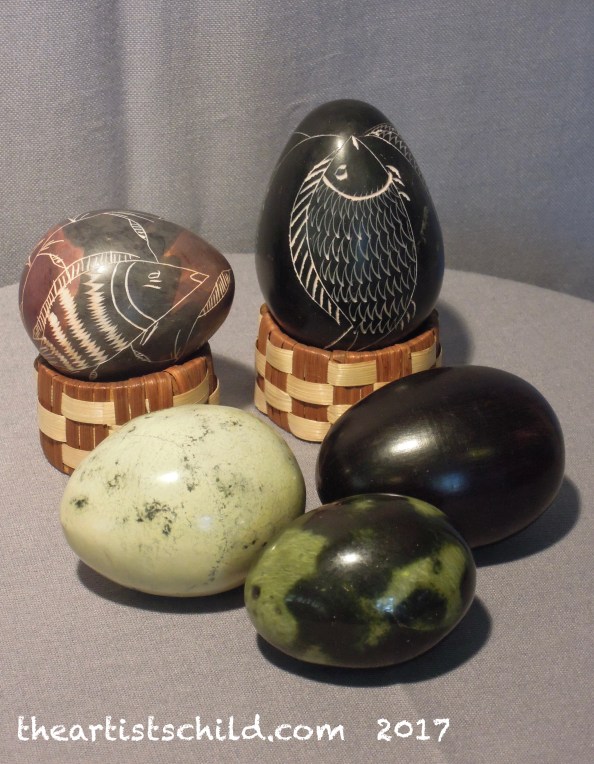
African stone eggs, two painted and hand engraved and a black wooden ebony egg

DSCN4227

Taiwanese Sodalite egg (left), orange simulated marble egg (centre back), Italian marble egg (right), my talc stone egg (front).

I had a go at sculpting my own talc stone egg.  This caused a great deal of dust and took a lot of sand paper to get the right shape.  I now appreciate how much effort it must take to shape and polish very hard stones.

One year I decided to paint some eggs as table decorations.  The most difficult part was blowing out the white and yolks.  Because I thought I would run out of breath, I used an air brush compressor with a syringe needle attached to the end of the tube.  With too much pressure the egg exploded so it was very tricky and messy.  The blown eggs were then coated with layers of acrylic paint and stippled with another colour to make a textured effect.  I added some gold dust left over from gold leaf that someone had given me and applied it with the varnish.  I think that the aqua ones look like real eggs.  The layers of paint has made them less fragile.

I have a real ostrich egg that I bought at the Melbourne Zoo shop ages ago.  There must have been an excess of eggs in their breeding programs.  Wonder if they made huge omelets.  There were holes in each end of the egg where they had blown out the innards.  These were rather large and not very attractive so I glued in some enamel flower earrings that I did not wear.  This is probably the closest I will get to anything like a Faberge enamel egg and the ostrich did most of the work.  It has such a beautiful creamy shell and is quite heavy.

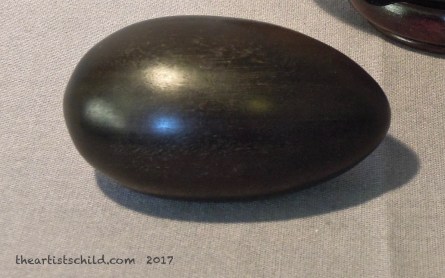
The following black egg is made from Australian post ice age river red gum found buried in the flood plains of the Murray River.  It is very much like Irish bog oak.  These ancient trees stopped growing about 5,000 years ago and the ancestors of todays indigenous Australians would have been around to see them growing.  This was a gift from a friend who knows the maker.

Version 2

The oldest manufactured egg in the collection is tiny.  It is a novelty made in Germany and sold in Melbourne in the late part of the 19th century.  The egg contains the “smallest doll in the world,” a little peg wooden doll that we inherited from a relative.  Unfortunately some long ago child had broken one of the arms because these are movable.  The limb was long gone.  I had to give it an arm transplant using a tiny piece of matchstick and glue (click on the pictures for detailed close ups).  This was really fiddly and I nearly glued it to my finger.  The doll looks a lot happier.

That’s our egg collection.  It is amazing how many creative ways there are to make decorative eggs and these are only a small sample.  It seems appropriate that a major symbol for creation should inspire all sorts of creative, eggceptional ideas.  Sorry, couldn’t help myself.

Kat

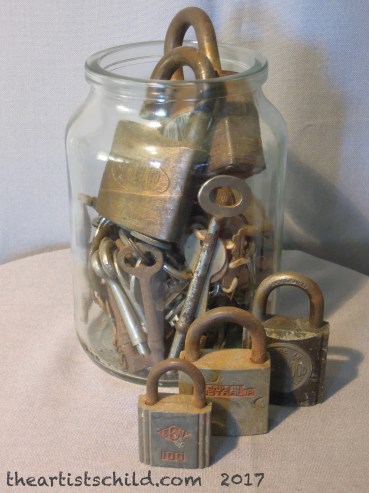
Keys and Locks

The world is full of keys and locks.  Having the right key is important if you want to be able to do something creative.   Without this key or keys you can find yourself locked out and unable to progress.  This can be very frustrating and not good for your creative spirit. Finding the key to achieving your aims is never easy.   I hope that the following suggestions may help.

Sometimes the key is learning a new skill.   If you don’t know how to do something that is vital to your creative area you will never progress.   I found this with tapestry weaving.  As I have mentioned in a previous post, there were certain tricks that had to be learned to be able to do weave anything I wanted so I did all I could to master these skills.  It always pays to keep acquiring knowledge in your field, as learning is a key to excellence.

Often the key is finding the right person or persons to help you and for joint or group collaborations.  It is often difficult to get anywhere without connections and support.  “No man (or woman) is an island”, as the saying goes so don’t isolate yourself.  In any creative field working with others can expand your opportunities and is much more enjoyable. With music Ellie and I belong to a ukulele group.  It is a place where we can play and learn together, as well to gain support for each other’s song writing and performance.  This type of help is very important for anyone working in a creative field and it is good to join industry support organizations where you can get advice and assistance.

Another key to doing well in your creative field is gaining experience.  There are many ways to do this.  Volunteering for a local community group.  This will probably mean working for free, but it also means that if you are new to the field, organizations are less likely to turn you away.  Our ukulele group has performed for community groups and at a festival for free and it has helped us gain experience with live performance. I also volunteered before getting a job in a creative field.  I paid my dues by working voluntarily for over a year in various organizations before I gained a full time job.  The work experience made the difference.

I think that a major key is to make sure that you enjoy what you are doing. Without that element of fun it is harder to be produce fresh and innovative work.  Maintaining enjoyment may sound easy but when you are doing something all the time it can sometimes become repetitive and lose the fun aspect that attracted you in the first place.  So you need a way to keep feeling excited.

In this regard other committed, enthusiastic people are invaluable.  Talking with your fellow creatives can give you more motivation. Looking at the work of creative bloggers is also very inspirational.  So is doing a blog of your own.  Taking some creative classes to get out and mix with others can revive your interest.  I have been thinking about doing some life drawing in the winter because I am a bit rusty in this area.  It is something I don’t do all the time and will improve my skills, as well as get me out with other artists and stop me from stagnating.

DSCN4092

So don’t feel like you’re stuck and getting nowhere. There is a key for every lock. You just need to find it.

Keys without locks

Locks without keys

Not meant to stay closed

Forever to freeze

Work out the secret

Find the right key

Open the door

A new world, a fresh breeze

(©theartistschild.com 2017)

Kat