It’s something to do with the Light

Version 2

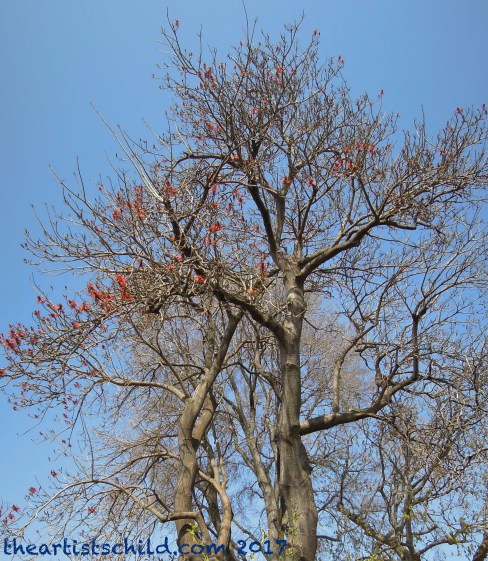
African Coral Tree, Melbourne spring 2017

Every place has a certain quality of light and this has long inspired visual artists and writers. Just think of Monet and Turner. Their work was all about light. Descriptions of light levels can set the mood of a story or poem. Just the words “sunny” or “overcast” put a picture in your mind. Where ever you live or travel the light has a big influence on how you feel and view the world.

It’s beneficial to have an awareness of how the light effects your environment so keep a visual or written record. If you keep a journal it is helpful to record the weather each day and your emotional response.  The light in southern Australia is softer than in the northern regions. A Japanese friend once told me that she could not get over the sky in Australia. She said that it seemed closer which I found quite enlightening. I’m now always conscious of the sky here and wonder if this is true for others elsewhere.

In Melbourne we are lucky to experience definite seasons and the sky can vary from a deep azure blue to pale violet and everything in between. The light can change by the moment and this is especially obvious at the beach or a park. Here are a series of photos taken by Ellie, some on the same day, that show the different qualities of light in our area, from the intensity of summer days to the hazy light of autumn and the brooding cloudy sky of winter.

Summer Scenes

Autumn Beach Scenes

Winter Scenes

It is now spring and everything looks fresh and new. I love this time of year despite the hay-fever attacks. It’s easy to be creative in the spring and is a pleasure to take photos in Melbourne’s soft light. I went out and took some photos in our garden because the light was so beautiful and I loved the way it played on the flowers and plants. The last camellias are out in our front garden. I wish I had a better camera to do them justice as they have a beautiful soft texture and subtle variations in colour.

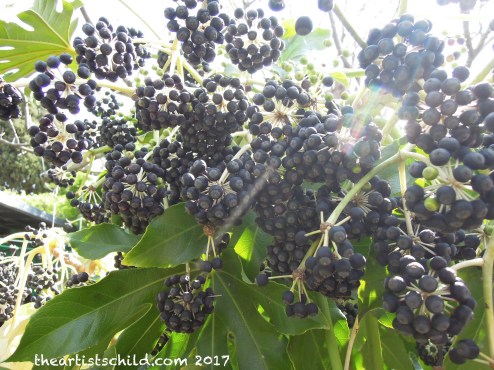
In the back garden the Aralia fruit has turned black. I took a photo with the sunlight streaming through a dense cluster, which created a halation effect and makes the photo sparkle. The action of bright light on a camera lens can really enhance an image and with a digital camera it’s much safer on the eyes than looking at the sun through an old film SLR.
DSCN5482

Taking close-ups in this spring light shows up the details. Wisteria flower buds, Japanese Yeddo Hawthorn buds against dark green leaves and a small ground creeper with tiny flowers all seem infused with the radiance of the sun. In summer with the harsher light that creates stronger contrasts it will become more difficult to photograph the small things with my basic camera. Then I will go for the big picture.

Where ever you may be in the world and whatever your art form, try to notice the quality of light. How it varies from once location to another and how it makes you feel at different times of the year. After all sunlight is creative energy.

Kat

(I’m going to take a couple of weeks off blogging to take care of other things that need doing. Thank you to everyone for the likes, following and for visiting my blog. It’s much appreciated. See you soon).

My favourite beach related instrumental is the classic Gunnamatta by Melbourne singer/songwriter, Paul Kelly. Gunnamatta Beach, a popular beach for surfers, is south of Melbourne on the Mornington Peninsula and the following film shows several enjoying the sparkling waves on a sunny day back in the 80s set to Paul Kelly’s music

Vision: Seeing Things or Not

S/W Ver: 96.66.76R

Photo by Ellie

The human brain is strange. Sometimes it allows you to see things and sometimes it doesn’t. You can look at an image for ages and not really observe it clearly and at other times you can see things that aren’t even there. This can be both annoying and great for your creativity.

In my last post I put up several photos of Ellie’s and was so focused on the images that I did not notice there were some hand blurs at the edges of some of the pictures. It was not until I saw the photos on a larger screen that I saw the problem, which I have now corrected. I was so busy looking at the main scene that I could not see this detail. Sort the opposite of “not seeing the forest for the trees.” It was a definite case of selective vision that can happen to all of us at times.

This got me thinking about the way we see things. If you want to go into the art history and cultural side of this John Berger’s seminal book Ways of Seeing (1972), based on a BBC TV series, is a good place to start. What I’m talking about is more from the personal creative side. One person can look at the same thing and see something totally different and our individual vision is what gives us original ideas.

I was looking at some of Ellie’s old photos and found the one at the top of this post. It was accidentally snapped when she was holding her phone and she had completely discounted the shot. But I saw this as a wonderfully evocative image with her hair floating out from the dark silhouette of her hat against the bright cloud filled sky. She saw it as a mistake but I saw a quite beautiful scene. Always take another look at what you have done. You might be surprised.

Version 2

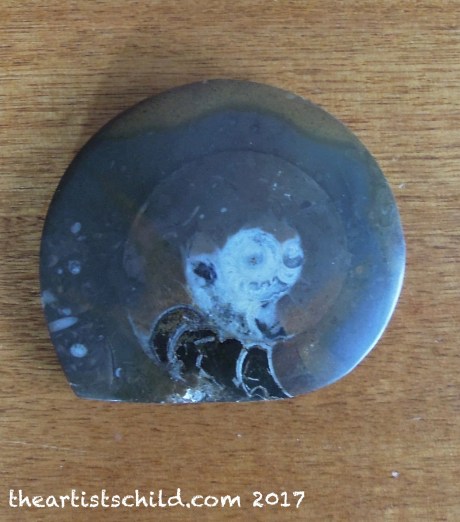
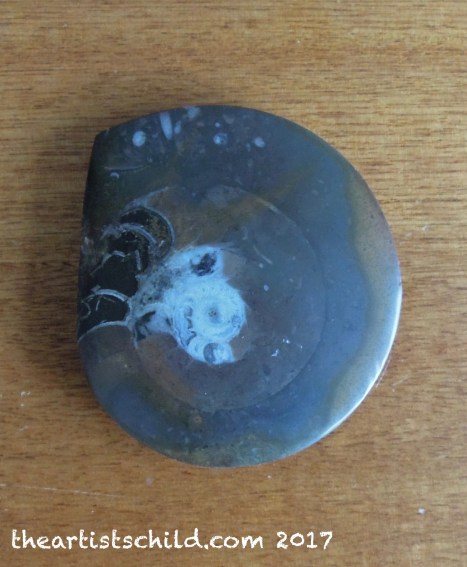
Ammonite Fossil

Seeing things in another way can provide inspiration. We have an unusual polished ammonite fossil that was bought on a holiday as a memento. It was not chosen because it was the perfect specimen, but when you view it from a particular angle it looks like there is the head and torso of a Shakespearian Gentleman wearing a puff sleeve jacket and a neck ruff. Can you also see him?
Version 2

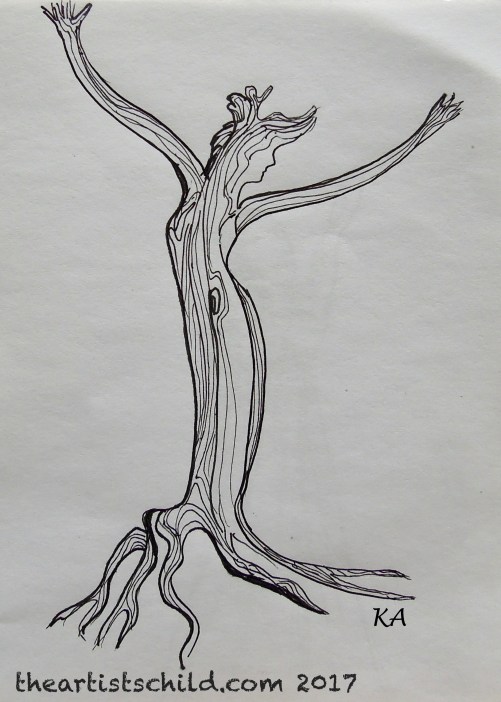
This ability to see things that are not really there can lead to interesting artwork. I have a small piece of driftwood, that when you stand it vertically, is like a tree that resembles a figure. This inspired the following ink drawing in my sketchbook.


Version 2

Dryad, Pen and Ink Drawing by Kat

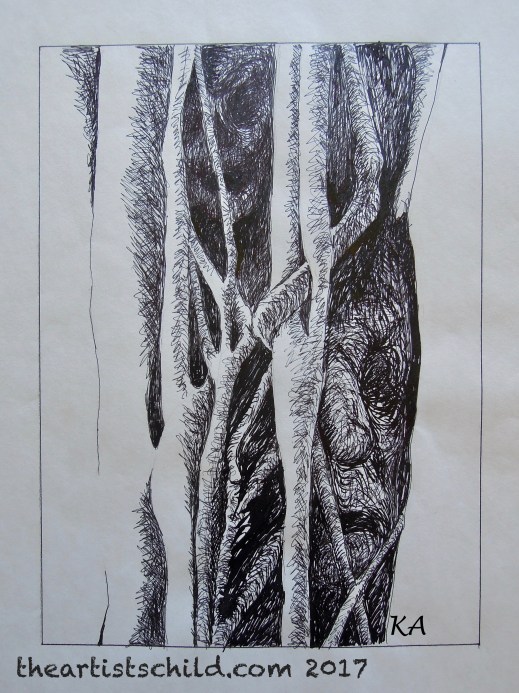
The brain often sees figures and faces in trees and foliage because we are wired to recognize the human form from birth. Using this concept I did a pen and ink drawing of the imaginary faces that I could “see” in the trunk of a vine-covered tree. It is called Spirits of the Forest, and depicts some of the scary and strange beings that may be encountered out in wildness of the Australian bush.

Version 2

Spirits of the Forest, Pen and In Drawing by Kat

The human mind is sometimes selective and we can miss seeing the obvious but it can conjure up all kinds of images if we see with both our eyes and inner vision. Just keep looking.

Kat

A great feel good song is I Can See Clearly Now. Jimmy Cliff did a terrific version in the 90s but I also love the 70s original by Johnny Nash.

Inspiration is Closer Than You Think

S/W Ver: 96.66.76R

Sometimes you imagine that you need to find inspiration in exciting far away places. You know, that “the grass is always greener on the other side of the fence.” It is wonderful to travel but it is not always possible and inspiration can be closer than you think. Your local area can be full of inspirational locations if you take the time to look. Often when you visit the same location over and over it can be a great source of creativity.

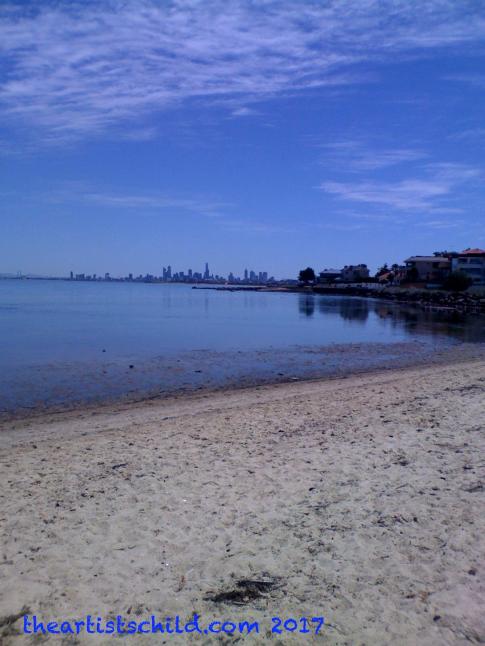
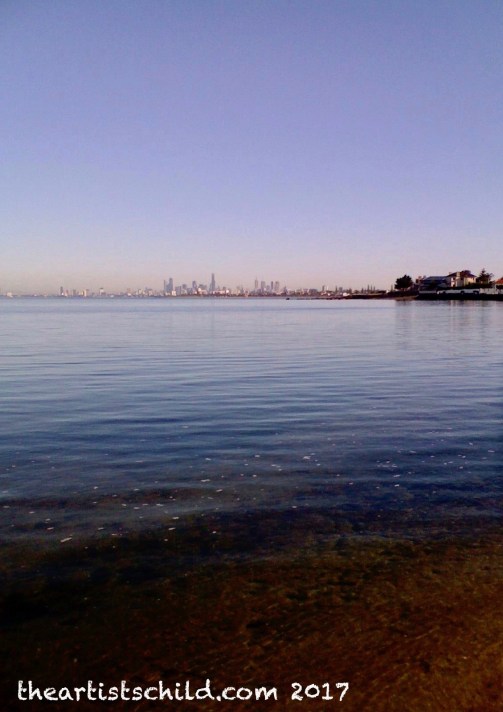
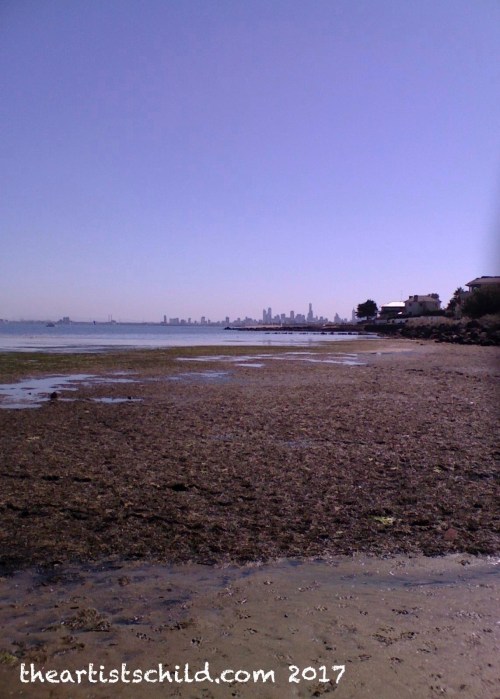
We don’t live far from Port Phillip Bay and one beach in particular has been a source of inspiration. At various times over several years Ellie recorded this beach on a simple phone camera. This series of images show the changes of season, light and mood, often from the same angle. Such a location never stays the same and can keep giving you new ideas. There are pictures of the scene with a sandbar, still water, and the exposed rocky shore and at different times of day. Sort of reminds me of Monet’s obsession with Rouen Cathedral that he repeatedly painted under various light conditions.

Version 2S/W Ver: 96.66.76R

S/W Ver: 96.66.76RS/W Ver: 96.66.76R

In each of these photos you can see the City of Melbourne’s skyline, which is ever-changing. A couple of the images are from 10 years ago and there are now more tall buildings that can be seen from the beach. The beach itself has undergone development with new board walks and is less peaceful than it once was so it is great to have it frozen in time in these photos.

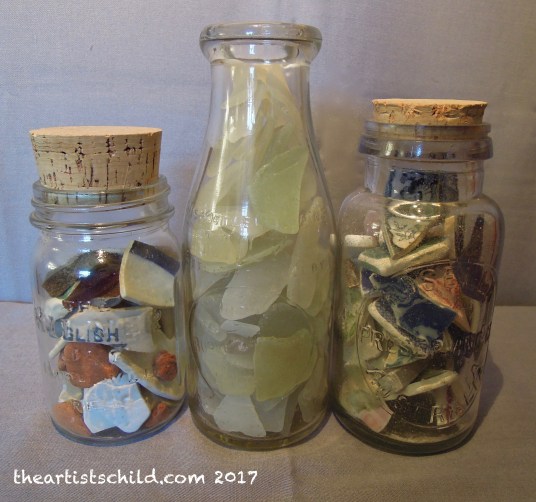
It is also inspiring if you can collect interesting items for your creations at a favorite place without damaging the environment. The same beach has provided me with interesting material for some of my found objects that I have in the studio. Over several years Ellie and I would pick up sea glass of various colours from this beach. A vintage milk bottle was filled with white glass to give it a milky appearance and I arranged a lot of the coloured glass in layers in a large old spaghetti storage jar to form an interesting sculpture. It sits on my work table and the light from the windows makes the glass glow.

Other bits of archeology are washed up on the shore. Fragments of old patterned china and earthenware look wonderful in interesting old glass jars. Did these shards wash into the bay from storm water drains or were they tossed from ships? It seems that eventually all rubbish will end up on a beach somewhere and some of it not good. At least these items do not affect the eco-system and can once again become something to enjoy. You never know what you will find.

Version 2

Whether you live near the sea or a lake, a park or nature reserve, hills or mountains or a desert, there is sure to be some special place that will keep attracting you. Don’t ignore your local environment. Familiarity does not have to mean contempt. It’s all about paying attention to details and changes, which are in themselves inspiring.

Kat

I have included my favourite 80s beach song (I love that era for music). It is one of the few girl beach songs, as most of them are by boys. Echo beach by Martha and the Muffins is full of nostalgia and is about enjoying the beach on your own as a place to escape the rat race.

Australian Peacock Spiders Rock

If you need some cheering up this quirky video will make your day. It’s by Australia’s famous “peacock spiderman,” Dr Jurgen Otto, the discoverer of this unique type of spider. These small creatures are not scary at all. Like peacocks the males have the colourful markings to attract females and are great disco dancers. Nature is constantly amazing.

Kat

Scenic Apostles Video

I have to share this beautiful drone video by Franky Tartner I found today on YouTube. It is of Victoria’s spectacular Shipwreck Coast where the famous natural formations known as the Twelve Apostles occur. Now there only seven of them left but more will be formed by the process of sea erosion. We just have to wait. This video shows a part of the coast around the Loch Ard Gorge with a few of the Apostles. Relax and watch the ocean waves swirling around our stunning southern coastline.

Kat

Getting Around Life’s Obstacles

Version 2

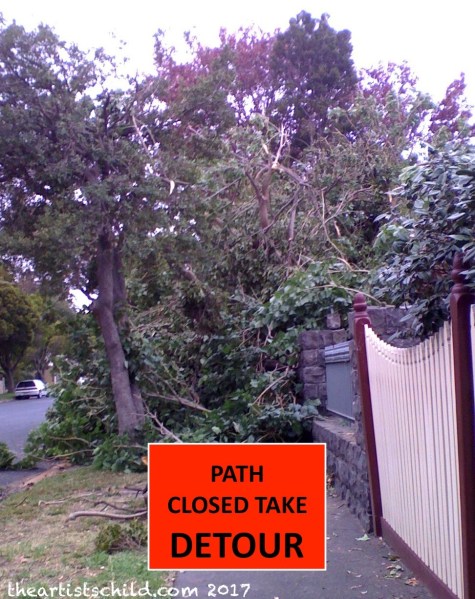
Creativity isn’t just about making art. It is also about solving problems. Sometimes you come up against an obstacle in your life, whether physical or mental, that seems impossible to remove so you must find a way around it. This may involve a bit of rethinking of the situation to find a satisfactory solution.

In some ways we create our own obstacles with thoughts like “I must wait until this or that happens before I can do such and such.” I know I am guilty of this type of thinking at times. Dishwashing is my least favorite housework activity. It never stops and I would rather use the time for creative activities.  Before we had our renovations several years ago we could not fit a large dishwasher in our kitchen. We previously had a bench-top dishwasher that had given up the ghost and the brand was not longer available. We thought that we could not get a new dishwasher until we had renovations, which still required a few more years of savings.

A friend who was renting a house said that this was stupid and we were putting up unnecessary barriers. She had bought a second hand mobile dishwasher that could be attached to a tap without it needing to be permanently installed. We did not have the space for this so looked around and eventually found one made for caravans and put it on a shelf near the sink. This worked well and when we finally had our renovations we sold it to someone who needed a small bench dishwasher for their workplace. So our problem was solved and we got around an obstacle that was driving us crazy.

Version 2

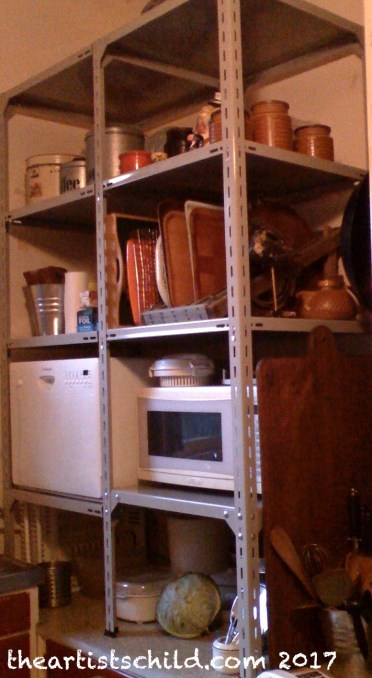
Old Kitchen Shelves

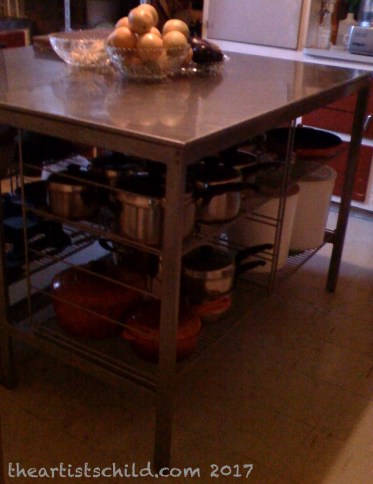
Lack of money is often an obstacle to doing things but you can usually work your way around this problem. Still on the subject of renovations, our finances did not extend to putting in a new bench and a linen cupboard in the laundry. It previously lacked a bench and had some large old wooden shelves, which took up too much space. We reused an Ikea stainless steel bench and some industrial metal shelves that were in the old kitchen, together with an Ikea drawer unit on wheels that had been in the laundry. With a new marmoleum (linoleum) floor and freshly painted walls the room looked more spacious. Reusing existing items gave us what we needed. Just because you don’t have the money does not always make a situation impossible. A compromise can work well.

Version 2

Old kitchen bench

When in the middle of any kind of project you can run into problems and these should never be an obstacle to getting it finished. Just think of Michelangelo. When he was carving his figures he sometimes came across flaws in the marble and would have to adjust the composition accordingly. We might not all be Michelangelo’s but we can take a leaf out of his book and think on our feet if some difficulty pops up in the progress of our work.

Seeing beyond an obstacle is sometimes what is required to solve a problem. After playing my ukulele and singing before an audience for a while, I suddenly developed stage fright and became extremely nervous. Performing was now more stressful because of anxiety. I knew this was ridiculous as I really enjoy singing so looked up ways to cope on the Internet. As with most skills in order to build confidence you must practice and practice so that you know your material thoroughly. If I imagine the audience as friendly and ready to be entertained, I can look beyond my anxiety and have fun. I will never be able to get rid of my nerves completely but they can be used to increase the energy necessary for a good performance. Now I can control them rather than the other way around and I look forward to performing.

Version 2

Even if you cannot remove an obstacle it need not become a huge barrier in your life. Try to work around the problem, be flexible and use creative thinking.

Kat

As a child one of my favorite performers was Jerry Lewis. I loved watching his films on TV. He was a comic genius and always seemed to be confronted with some kind of obstacle that led to hilarious situations. I like this scene from The Bellboy (1960), which uses visual comedy to great effect.

The Joys of Silliness

Version 2

Silliness is undervalued. By this I don’t mean stupidity but having uninhibited fun. It is the opposite of pompous and stiff behavior or calculated coolness. Adults are able to get away with being silly playing with children and pets but in other situations it is usually discouraged. Well silliness in its true sense makes us happy and has inspired all kinds of creative artworks. It is an antidote to gloom and unpleasant situations. We should never repress our innate silliness.

From school age we are told to “stop being silly.” But probably the best moments of school life were the ones where someone was being silly and these were often anxiety relievers. Those crazy conversations had with one’s peers, the jokes, the funny sayings you will never forget and the mad games you made up together. And there was always a classroom clown who could crack everyone up with some really silly comment. It may have annoyed the teacher but it was usually a breath of fresh air, especially in a boring class.

Once grown up many people become afraid to behave in a silly manner in public. It is frowned upon and subject to authoritarian disapproval in numerous walks of life. The entertainment and arts industries are usually the only acceptable areas where it is actually encouraged. Comedians, cartoonists and writers of humor spread their joy into the world and make us laugh at silly scenarios and the foibles of human nature. They have a license to be silly.

We should celebrate the local eccentrics in our communities. They put us in a happy mood with some of their silly antics. Often they are performing the function of a medieval court jester and poking fun at the government like Lord Buckethead did in the last UK elections. Or they are creative people who love to live a flamboyant lifestyle like Melbourne’s famous milliner, Richard Nylon, who delivers his hats on a Penny Farthing bicycle. We need people like this in the world. They turn silliness into an art form.

Everyone should be allowed some silliness in their lives. When you are engaged with crazy, whimsical thoughts or actions this can inspire some very creative ideas as well as making you feel better. Don’t leave it to someone else to give you this feeling. Get out and do something silly. Ellie and I play the ukulele with others and sometimes sing very silly songs. There is an amateur drumming group who get together in a local park and have fun on weekends and a group of people who go to the beach some mornings just to laugh for the sake of it. One of our friends does tap dancing and has performed in stage shows and in parades and has had a great time.

DSCN5347

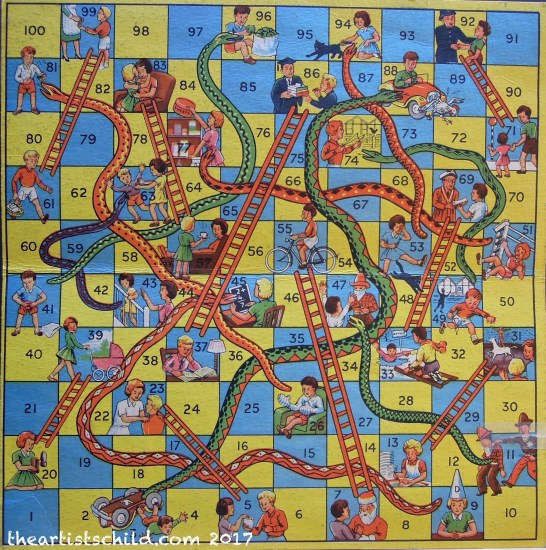
Vintage Snakes and Ladders Game

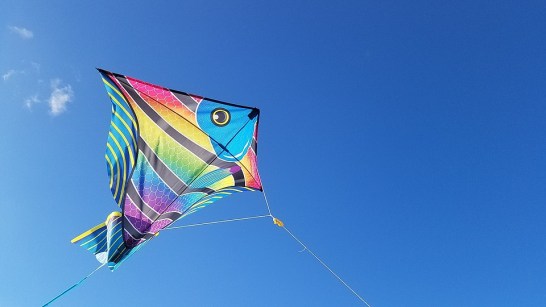
Being silly can be as simple as playing some board games with friends. Just don’t be too competitive or it will spoil the fun. Or you could make a kite and fly it in a park. Ellie and I did this as teenagers. We got it airborne but it eventually crashed and broke. It was fun while it lasted.

You could also make really silly sandwiches, with multiple layers just for the hell of it and serve these to guests. Wear a crazy scarf, patterned socks, colourful shoes or something slightly silly to work just to brighten up your day. But remember there is a fine line between silliness and annoying. You know, like the awful office comedian (think Ricky Gervais as David Brent in The Office). Don’t force the silliness. Keep it natural.

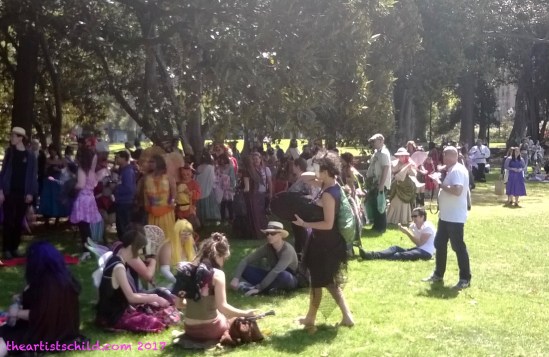
If you like to dress up in costumes there are Cosplay events in most cities. You can become a fanciful fictional character. Some of these are quite silly in a good way. One summer’s day Ellie and I attended a costume picnic with about a hundred people in a city park. On the way to the event we may have had some strange looks from passers-by, but lots of people did smile, as it is not something you see everyday. It was great to be with so many happy, creative people laughing and enjoying the moment. There were people with bubble makers producing giant bubbles, lively drummers and some knights having a sword fight. This was not an official event but organized by some local costume enthusiasts online. We need more of these types of things these days with groups of people making their own entertainment. There is nothing like getting together with like-minded people for some harmless silliness.

Version 2

Whatever you do there are many others who also long for some silliness in their lives and are more likely to smile than frown and will want to join in on the fun. You will feel less stressed and come up with all kinds of ideas.

Kat

I love bands that aren’t afraid to be silly. The Australian group Mental As Anything did some great songs in the 80s with some silly videos, like the whimsical If You Leave Me can I come Too.

Creative Life: Be Inventive


DSCN5283

We all need some kind of tools to be creative. For those who work with their hands these can be simple or complex depending on what you do. Often due to lack of money or availability art and crafts people have needed to make their own tools and equipment, which has led to some imaginative solutions. I have made some simple examples myself because of the expense or if I could not find something suitable. It is good to be inventive.

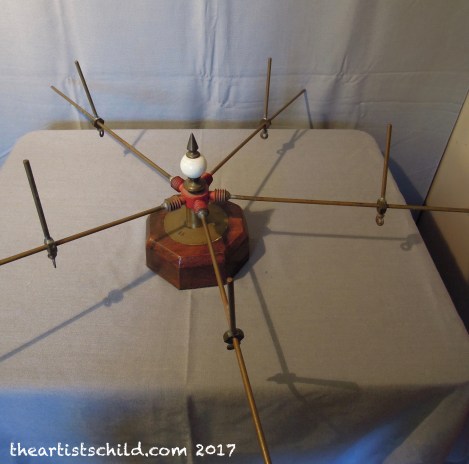
Looking at homemade inventions from the past can be inspiring. I have a very old metal yarn winder (a swift) that was inherited from my grandmother. I don’t know where it came from but it was obviously homemade by someone who knew how to use a soldering iron. It is made up of an old curtain rod finial, a metal nut with screw holes on a brass and wooden base, screw-in horizontal brass rods that have vertical brass rod attachments to hold the yarn. Someone went to a lot of trouble to make this winder, probably at a time when they were difficult or expensive to buy. It is quite an ingenious solution to an old problem and might have been created by someone who was sick of holding the yarn as it was wound into a ball.

Everyone who works with yarn needs some kind of winder. I had a look on Google image search and many craftspeople still come up with interesting DIY yarn winders using a variety of materials, from old coat hangers to collapsible wine racks. It is good to see in this consumer-oriented day and age that the inventive spirit is alive and well.

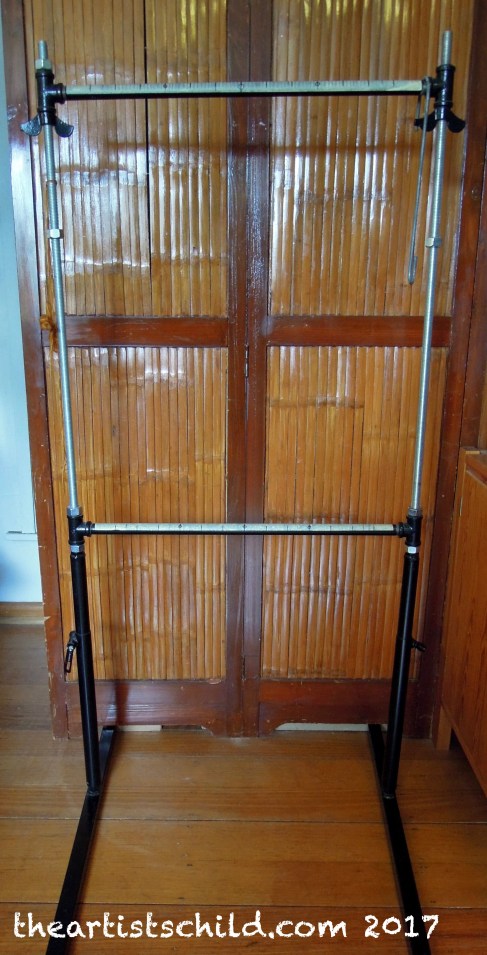
This sort of inventiveness has led to home cottage industries. While I have made my own basic wooden frame looms, I needed a larger adjustable loom for tapestry weaving and found one made be a local man who made these from basic plumbing supplies for a reasonable price. He started out making one for his wife who was a tapestry weaver and others liked his design so he made them for students. DSCN5344

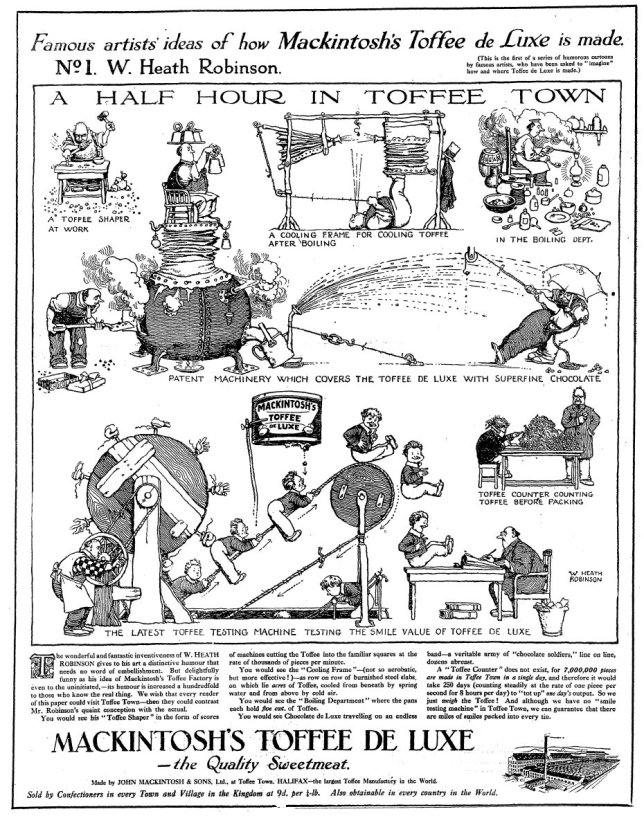
When creating your own equipment try not to get too bogged down in detail. The great illustrator W Heath Robinson was famous for his hilarious drawings of ridiculous inventions and contraptions. These made even the most basic of processes complicated. There is no need to go down this route and it is best to simplify as much as possible.
william-heath-robinson-public-domain-pic-14

Mackintosh’s Toffee Advert, Illustrations by W Heath Robinson, Public Domain Image, freevintageillustrations.com

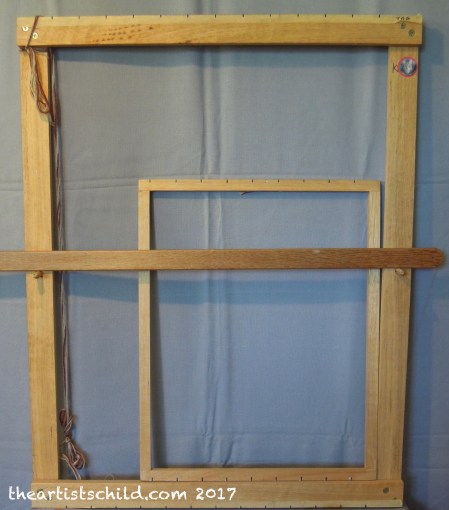
With very basic carpentry skills you can make all kinds of things with a drill. I made a basic tapestry frame loom shown in a previous post. If you get the wood cut to size at the hardware store, all you need to do is screw it together. I inserted a couple of dowel pegs on each side of the frame to hold a narrow wooden crossbar so that I could suspend my design behind the warp. This made it easier to transfer my designs onto the threads and was an improvement on a simple frame.

Version 2

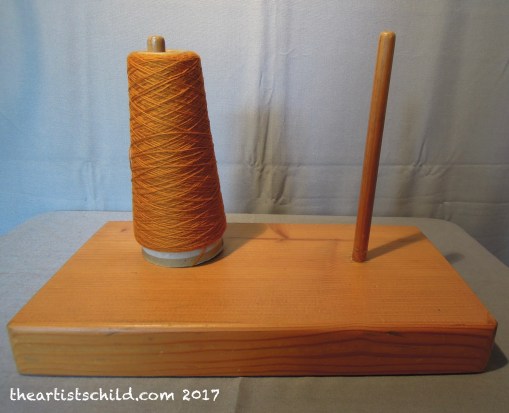
Ellie also made a pegboard for holding cones of yarn so that it was easy to wind it onto bobbins for tapestry weaving. She just used an off-cut of Oregon pine left over from our arbor and drilled holes for a couple of pieces of dowel. Then she sanded the whole thing and coated it in varnish. Didn’t cost a thing because we already had the materials.

DSCN5323

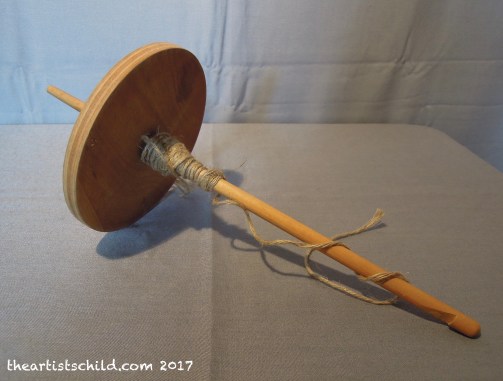
Sometimes you want to try out a craft but do not want buy expensive equipment, especially if you don’t know whether you will like it or not. This is a good time to create you own. As a part of learning about the weaving process I tried out spinning with a drop spindle (How to video). Luckily a relative who had done this in the past gave me her spindle. It is of very basic manufacture and if you had access to the right cutting equipment you could easily make your own. It only requires a short section of dowel and some thick plywood. Here is a link (How to video) that shows you how to make a similar spindle from scratch or with pre-cut discs.
DSCN5327

But there are always even simpler ways to make tools when you look on-line. It is possible to make a workable spindle using a couple of CDs, a piece of dowel, small hook, some glue and small rubber rings (here are the instructions for those interested).

Finding cheaper alternatives to expensive items is a clever way to learn a new technique. With spinning, the wool needs to be combed (carded) and formed into rolls (rolags) before it is spun. Some ingenious craftspeople worked out that it was possible to use slicker dog brushes instead of costly hand carders for this process. These are a fraction of the price. They might not be quite as good as the proper equipment but are ok for the beginner. I was glad that I had learned something about the spinning process without spending a fortune as I prefer to concentrate on the weaving with ready-made yarn.

Sometimes you don’t want a big piece of equipment cluttering up your workspace especially if you will not use it often. That’s when you need to think creatively. I needed to be able to draw up large designs for tapestry but did not want a large, expensive drawing board table. So I went to the hardware store and had a large sheet of melamine fibre board cut to size. I can put this on my easel to draw and then put it away against a corner wall of the studio for storage. It did not cost much and saves space.

When you can’t find just the right tool it is time to make your own. I wanted a mahl stick. This is a piece of dowel with a padded end that is used for resting your painting hand against when working on fine details. It is essential that padding does not touch any wet areas of paint or cause dints in the canvas surface so it is best that this rests on the edge of the painting. At the time I could only find ones with a short shaft and wanted one for larger sized works so I made my own. All I needed was a long piece of dowel, a champagne cork, some felt, twine and glue. It works really well and I enjoyed some sparkling wine in the process.

A tool can be made from anything if you use your imagination. For textural work with ink or paint I have used all kinds of things to create my own tools. Corks, sponges, a jagged cut toothbrush, pieces of carpet, homemade bamboo pens, disposable chopsticks and skewers can be used. An emery board is great for sharpening charcoal pencils to a fine point. They are so many things that can be employed as a tool.

Whatever your art or craft, it is great to make your own tools and equipment. Being inventive is part of the creative process and what you make can be as basic or as complex as you like.

Kat

It is wonderful to use your imagination. Here’s an oldie but a goodie by Gladys Knight and the Pips.

When a Blob of Glass is not just a Blob of Glass

DSCN5066

Sometimes the things that we hang onto have no intrinsic monetary value. What give them importance are the stories that they can tell. If you don’t write these stories down or tell others it could make an object meaningless so that it will get tossed out because no one will understand the significance. Such stories are also a source of inspiration.

We keep many useless objects because of their stories and not just for their aesthetic value. Often you are the only one who has heard these tales. There are some stories that I knew of which Ellie had no knowledge because she was not there at the time. It would be a pity if the stories were lost because this makes the things interesting.

DSCN5088DSCN5089

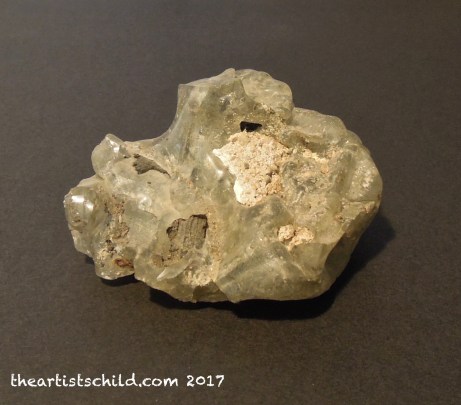
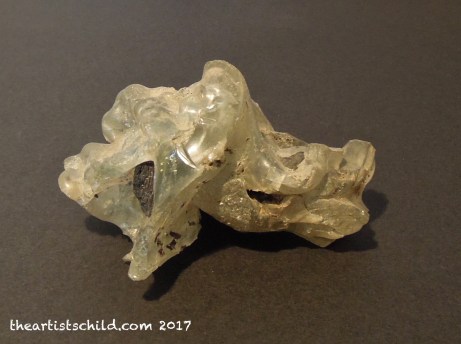
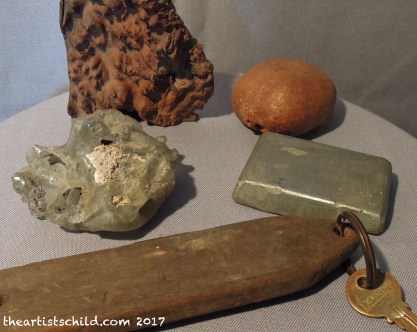
Take the blob of molten glass belonging to my grandfather. He told me that it was from the remains of a house up in the hills where his family holidayed when he was a child. Here they rode horses and enjoyed country life. My grandfather remembered being chased by stampeding turkeys that his mischievous younger brothers let out from their pen. The house was destroyed in a bushfire and he kept this bit of debris as a reminder of the place. Embedded in the glass is some mortar and charcoal from the intense heat of the fire. This piece of glass speaks not only about my grandfather’s experiences, but also of the history of our country. Bushfires are responsible for some of Australia’s worst natural disasters but are also needed for the germination of seeds and regeneration of the native eucalypt forests. Most of us or members of our family have been affected by bushfire at one time or another. For me this blob has meaning and I would never throw it out.

DSCN5081DSCN5078

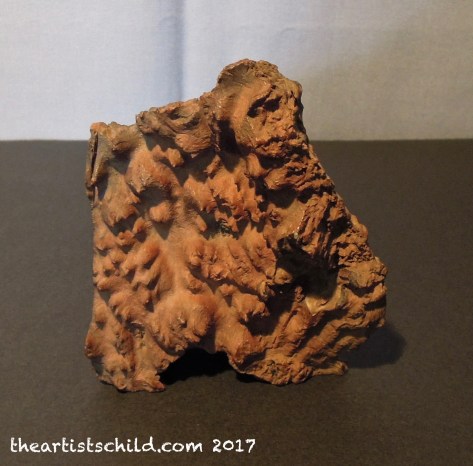
It is also lovely to keep something that was hand-made by a family member whether it is useful or not. Another thing that came from my grandfather is a piece of Mallee Root. These are used as firewood in Victoria because they are slow burning. He polished this fragment of root on one side to see what it would look like and for no other reason. This was typical of a man who was always curious about nature and trying different processes. I think that it is quite sculptural and beautiful and knowing its story makes it special.


Objects that tell us something about our forebears are intriguing. One of our ancestors was a sea-captain in the mid 19th century. One of his sons also sailed. We have quite a collection of old tropical shells that were brought back from their journeys. The ones that are not in great condition are in the garden. There are giant tritons, helmet shells and types of univalves. There is also a Black Bean Pod (Moreton Bay Chestnut) that comes from northern Australia. The pod is hard, woody and the seed inside rattles when shaken. I love the fact that these ancestors were combing some beach over 100 years ago and the shells and pod are still with us today. I wonder where they went and what adventures they had on their journeys to and from Australia. The shells and pod are a reminder of our history when the sea was the only way to connect with the rest of the world.

DSCN5086

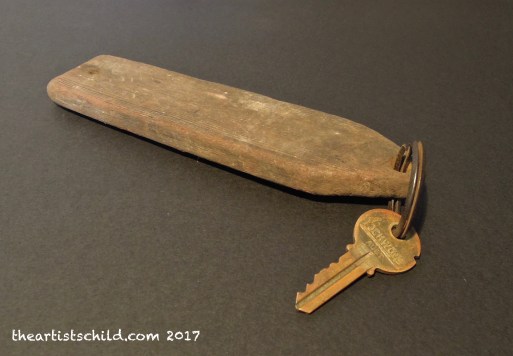
Some objects are valuable because they bring back personal memories. An old key attached to a long piece of wood belonged to the boatshed at the bottom of our grandparent’s orchard. Before the door fell off it was locked with a padlock. My mother’s family kept canoes that they used on the river in the shed, but these had gone when I was a child. Inside the rickety old building all that remained was a pump that sent water from the Yarra River to water the orchard. As a child I disliked the sound of that machine. It was mechanical and creepy and I tried to avoid it when it was on. The pump fed a giant sprinkler that sent jets a long way across the orchard and you had to run before it could drench you with water. In summer it became a game of dodge with a lot of yelling. Later owners eventually pulled down the boatshed but the key can still unlock the past.

DSCN5083

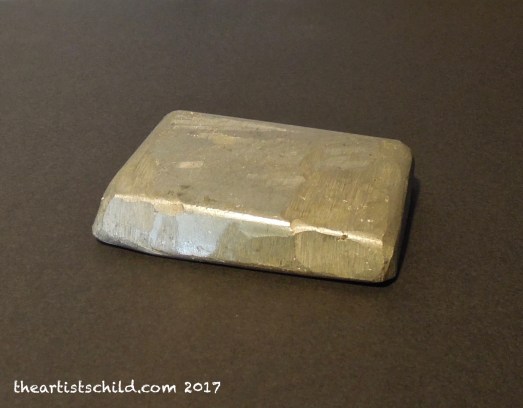
We often keep utilitarian, unprepossessing things just to remember a person. A rather plain, rectangular lump of heavy metal is something I treasure. It is a metallic sample that belonged to my father. He was an industrial chemist and this was something that was used in his research. To us as children dad’s job was mysterious because it was separate from our lives. Any thing to do with science was like alchemy involving strange processes and smelly chemicals. This sample gave his job a reality and when I use it as a paperweight I remember the rare visits to dad’s work seeing him in a white lab coat, surrounded by all kinds of strange apparatus. Dad’s piece of metal has never rusted or corroded so whatever the sample was for I’m sure it did a good job.

So an object can be more than a physical thing if it has some kind of story that is important to you. It does not need to be earth shattering or epic. Sometimes the most memorable stories are the simple ones. Pass them on or write them down. Use them to inspire. A “blob of glass” without a story remains a blob.

The things we keep

Their stories silent

It’s up to us to make them speak

Kat

One of the best songs ever written about Australia is Ganggajang’s Sound of Then from the 1980s. It is evocative, nostalgic and fun.

Time: A Blessing and a Curse

DSCN4997

Time and Tide

Time. It governs our lives. We can’t store it or get it back when it is lost. Because of its value there are many sayings devoted to time. “Time and tide waits for no man;” “Do not squander time, that is the stuff life is made of” (Benjamin Franklin); “time is of the essence;” “time flies when you are having fun;” and so on. We have become obsessed with time. It is something that needs to be managed if our lives are to be ordered so we can make the most of every minute. Time is now a resource and wasting any of it must be avoided at all costs. Time is a blessing and a curse.

Our concept of time is an artificial construct. Human kind has imposed a system of measuring natural cycles from seconds to hours, days to weeks and months to years. Time is really changes that are caused by natural processes: the sun going up and down, the aging of organisms and of our planet and the universe. Things will still move on whether we look at a clock or not.

737px-Edwaert_Collier_-_Vanitas_-_Still_Life_with_Books_and_Manuscripts_and_a_Skull_-_Google_Art_Project

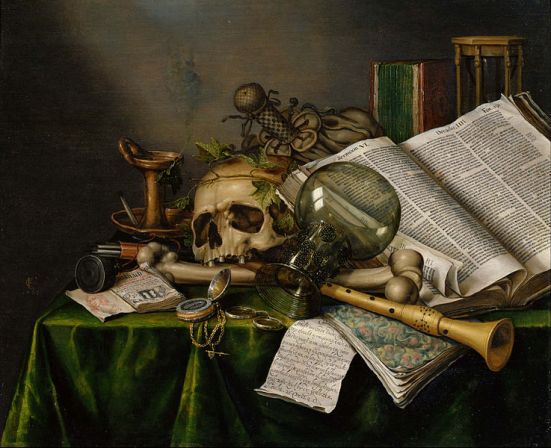
Vanitas by Edwaert Collier (circa 1640-1708) Dutch (Wikimedia Commons)

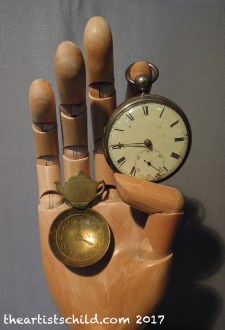
Ideas about time have long inspired writers, artists and musicians. Artists in the 17th century, a time when the plague could suddenly take away your life, painted beautiful Vanitas compositions containing reminders of human mortality. These often contained watches, hourglasses, skulls and written works associated with human vanity, as well as fruit and flowers that will eventual succumb to decay. A modern take of this idea can be found in works like Pink Floyd’s song Time (live version). It inspired me to create the vanitas depiction in this post.

Version 2

All is Vanity

The desire to control time has brought us wonderful stories of time travel such as H G Well’s Time Machine (1895), films like the Back to the Future Series and TV shows like Dr Who. I recently read David Mitchell’s imaginative book The Bone Clocks, that has a very original take on controlling time. I don’t want to give too much away but it was not about travelling through time, but the ability slow time down or speed it up. It is a fascinating and engrossing book that is well worth allowing some time to read.

From childhood we are encouraged to be involved in some activity even during our leisure hours. This probably goes back to the “idle hands are the devil’s tools” attitudes of the past. Some people think that sitting around and appearing to be doing nothing is a misuse of time and you are made to feel guilty. Time must not be wasted. But moments of apparent idleness are often thinking time when you allow your mind to wander and come up with new and different ideas. Some people like to be constantly productive but it is just as valid to work in bursts of creative energy with time for mulling over ideas in between. There is no one recipe. Worrying about time is just a pointless exercise and stops us from living in and enjoying the moment, something that is really important for creativity.

DSCN4990

Getting things done on time is often a headache. I’ve always found a looming deadline is strong motivation and have often needed the pressure to finish a creative work. However this has worked for me because I did all the groundwork, that is, the research, preliminary designs or outlines and lots of paragraphs if written work. Everything has then come together at the last moment (by this I mean from a week to a fortnight). Without all the preparation last-minute work would be impossible to complete. I would never use this method for a woven tapestry. It is something that just takes time.

DSCN4988

As with many words in English, “time” has other uses from just meaning the passing of the days. It is used to signify a period in history or the state of the world, as in “the good times,” “war time,” “a sign of the times,” or “behind the times.” It is also used to show repetition of an action as in “time and again” or “too many times.” We can’t seem to escape from its influence.

However, we can look at time as a blessing rather than a curse. With time you gain more experience of life, knowledge and hopefully wisdom. Life is a journey that takes time and if you are not where you want to be at the moment just be glad that times change and you can move on.

Kat

One way to time travel is to watch programs and films that are set in another period. Recently I saw the first series of Medici: Masters of Florence, starring Dustin Hoffman and Richard Madden (Game of Thrones). It has a beautiful theme song sung by Skin (Ann Deborah Dyer) called Renaissance. She has an amazing voice and wrote the beautiful lyrics.